

news
September 10, 2026
Many parents start searching for when to turn car seat forward as their child gets older, their legs begin touching the vehicle seatback, or they pass their first or second birthday. However, the decision to switch from rear-facing to forward-facing should not be based on age alone.
The most important rule is: Keep your child rear-facing until they reach the maximum height or weight limit allowed by the car seat manufacturer for rear-facing use. Once your child truly exceeds one of those limits, you can transition to forward-facing according to the car seat instructions.
If you are wondering when to turn car seat forward, check these three factors first:
A child can transition to forward-facing when they no longer meet the requirements for using their current seat in the rear-facing position.
You should not turn the seat forward just because your child has turned 1 or 2 if the car seat still allows them to remain rear-facing.
Quick Reference Guide
| Child’s Situation | What Should You Do? |
| Below the rear-facing limits | Continue rear-facing |
| Legs touch the vehicle seatback | You do not necessarily need to switch directions |
| Child is 2 years old but still fits | Continue rear-facing if allowed |
| Reaches the rear-facing height limit | Check the manual before switching forward-facing |
| Reaches the rear-facing weight limit | Move to the next stage according to the manual |

Rear-facing allows the car seat shell to support a child’s head, neck, and back together when the vehicle suddenly slows down or is involved in a frontal crash.
Young children have proportionally larger heads, while their necks and spines are still developing. In the rear-facing position, crash forces can be distributed across the back of the car seat instead of allowing the child’s head and upper body to move forcefully forward.
That is why the goal is not to switch to forward-facing as soon as possible, but to keep your child rear-facing for as long as the car seat allows.
Not necessarily. Many parents think of age 2 as a milestone for turning the car seat forward, but age alone should not determine when to turn car seat forward.
A 2-year-old may still be able to ride rear-facing if:
Child passenger safety laws can also vary by state in the U.S. Parents should follow both local laws and the car seat manufacturer’s instructions.
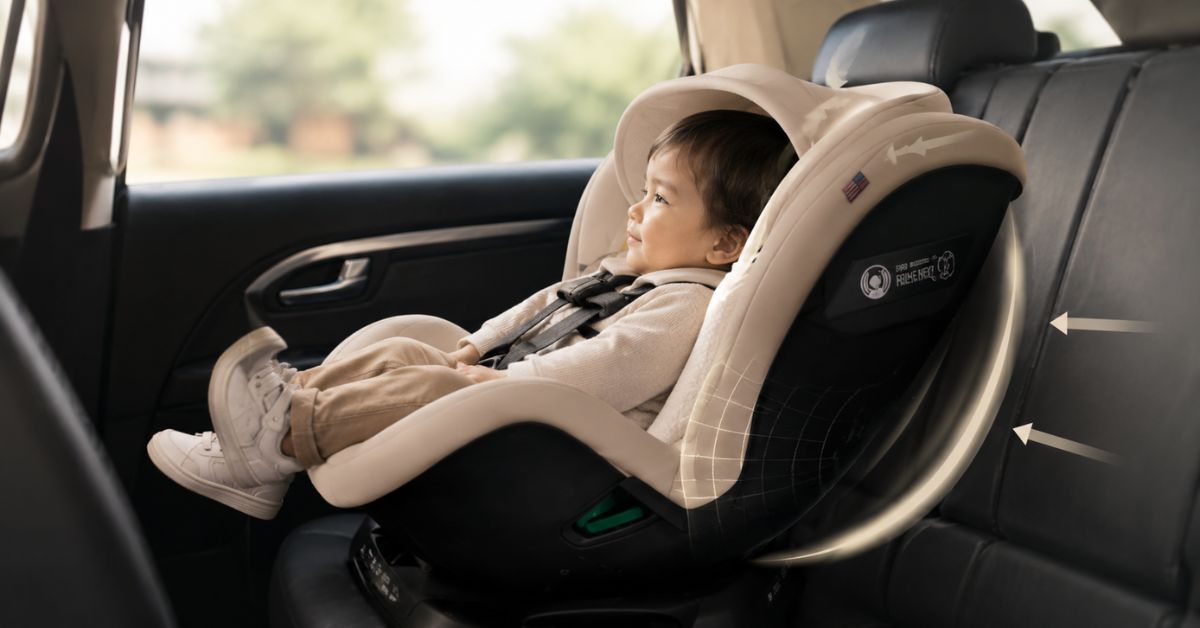
If your child’s legs touch the vehicle seatback, it does not automatically mean you need to switch to forward-facing.
As children grow, they may:
This is common for children who continue riding rear-facing. Instead of focusing only on legroom, check the seat’s height limit, weight limit, and head-position requirements in the manual.
Check your car seat if your child reaches any of the following limits.
Every car seat has a maximum weight limit for rear-facing use. Once your child reaches that limit, you should no longer use the seat in the rear-facing position.
If your child reaches the maximum height allowed by the manufacturer for rear-facing use, it may be time to transition to the next car seat configuration.
Some car seats require a specific amount of space between the top of the child’s head and the top of the car seat shell. If your child no longer meets that requirement, follow the manufacturer’s instructions for transitioning to the next stage.
Do not guess. Always check the car seat label and manual before changing the seat direction.
Once your child is truly ready, switch the seat according to the instructions for your specific model.
Check the following:
Do not simply turn the seat around while keeping all of the rear-facing settings the same.
The harness position for forward-facing use may be different from the rear-facing position.
Make sure the straps:
The chest clip should be positioned at armpit level.
When a car seat is used forward-facing, the top tether is an important part of the installation system when supported by both the seat and the vehicle.
The tether connects the top of the car seat to an anchor point behind the vehicle seat. It helps reduce forward movement of the car seat and the child’s head during a crash.
Check your vehicle owner’s manual to locate the correct tether anchor.
After installation, test the car seat at the belt path.
The seat should not move more than about 1 inch from side to side or front to back at the installation point.

When researching when to turn car seat forward, parents should also avoid these common mistakes:
Volden USA develops car seat solutions designed to support safety, convenience, and the changing needs of children at different stages of growth. If you are unsure which car seat is right for your child or need help understanding product specifications, contact Volden USA through our official channels for additional support.