

news
September 10, 2026
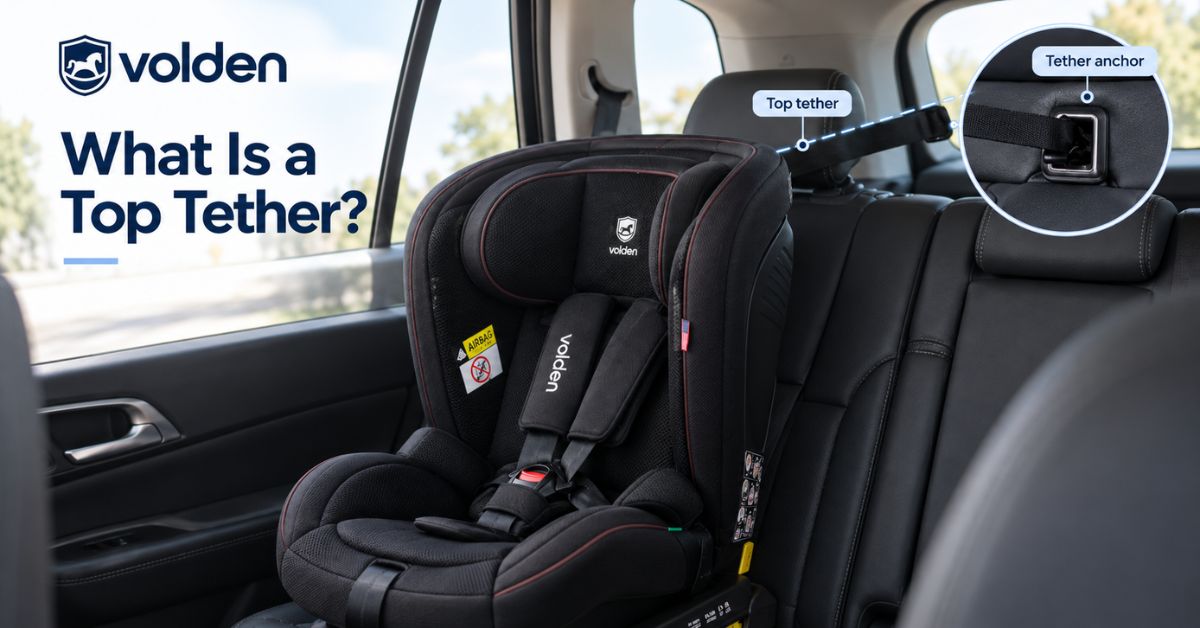
When installing a child car seat, many parents pay close attention to the vehicle seat belt or lower anchors but may overlook another important component located at the back of the seat: the top tether. This upper anchoring strap connects the child car seat to a designated tether anchor in the vehicle and is especially important for many forward-facing car seats.
So, what exactly is a top tether, how does it work, when should it be used, and how can parents identify the correct anchor point? Volden USA explains the key details below.
A top tether car seat uses an upper anchoring strap that is attached to the top or back of the child car seat. The other end of the strap has a hook that connects to a designated tether anchor in the vehicle.
In the United States, the top tether is typically part of the LATCH system:
It is important to understand that a top tether is not simply an extra strap that makes the car seat feel “tighter.” Its primary purpose is to help limit forward movement of the upper portion of the car seat during sudden deceleration or a crash.
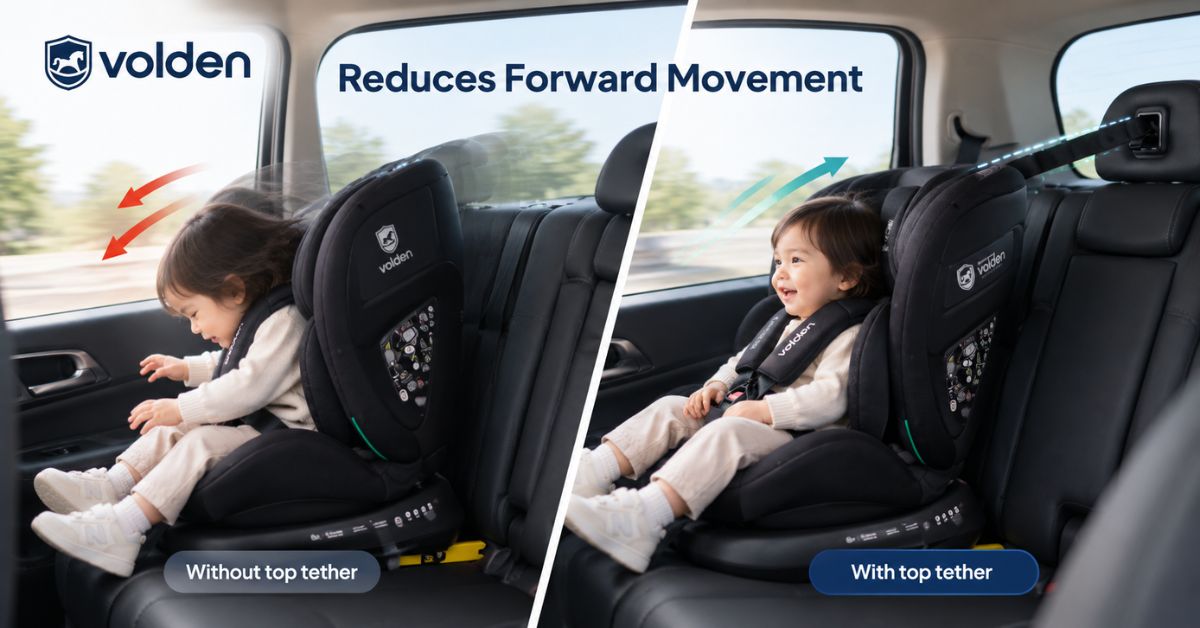
With a forward-facing car seat, securing only the lower portion of the seat may still allow the upper part to move forward when force is applied.
The top tether helps control this movement by anchoring the upper portion of the car seat to the vehicle.
A car seat can only perform as intended when it is installed according to the manufacturer’s instructions.
If the car seat manual requires the use of a top tether and it is not connected, the seat may not perform in the same configuration in which it was designed and tested.
For that reason, the top tether should not be treated as an optional accessory when the manufacturer requires it.
The top tether is especially important for many forward-facing car seats with an integrated harness.
When the seat is properly installed using either the vehicle seat belt or lower anchors and the top tether is attached as directed, the car seat gains an additional upper anchoring point. This helps limit excessive forward movement or rotation of the seatback.
The systems can be distinguished as follows:
| System | Location | Primary Function |
| Lower Anchors | Lower area of the vehicle seat | Secure the lower portion of the car seat |
| Top Tether | Upper or rear portion of the car seat | Help control movement of the upper portion |
| Seat Belt | Vehicle seat belt | May be used to install a car seat when permitted |
In the United States, LATCH stands for Lower Anchors and Tethers for Children. The top tether is therefore one component of the LATCH system.
A common misconception is that the top tether is unnecessary when a car seat is installed with the vehicle seat belt. In reality, many forward-facing car seats still require or recommend use of the top tether even when the seat belt is the primary installation method.
Always check both the car seat manual and the vehicle owner’s manual before choosing an installation method.
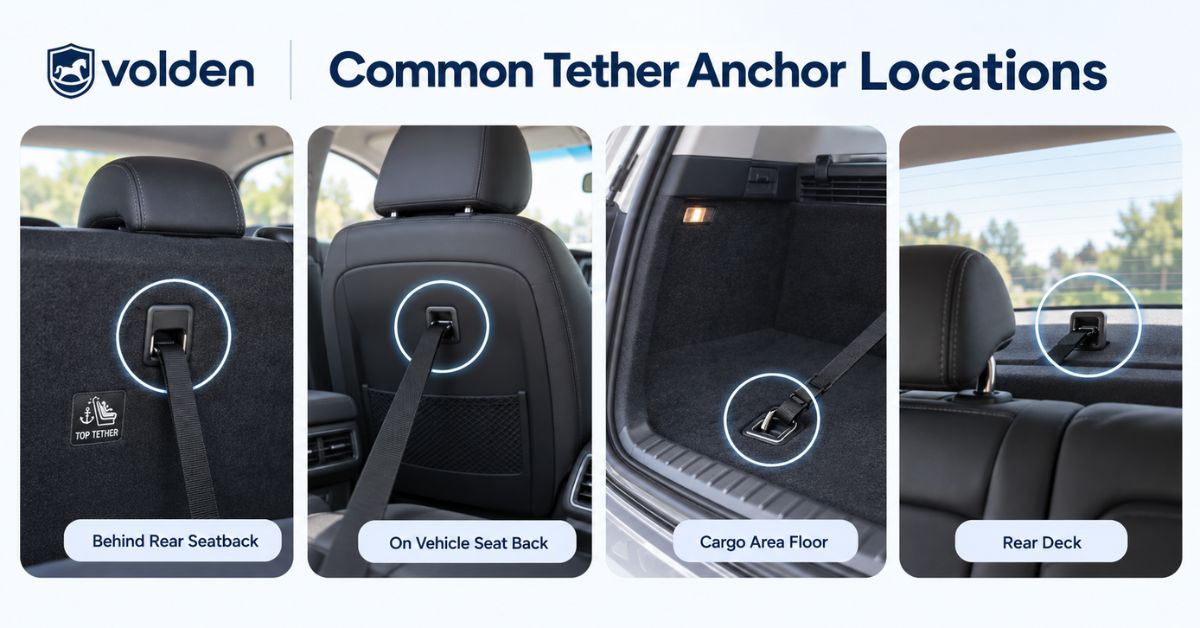
The tether anchor is not located in the same place in every vehicle.
Depending on the vehicle design, it may be located:
The tether anchor is often marked with a symbol showing a child car seat with an upper tether strap.
Cargo hooks, metal bars under the seat, or other hardware in the cargo area may look similar to tether anchors, but that does not mean they are designed to withstand the forces involved in securing a child restraint.
If you are unsure where the correct anchor is located, check the Child Restraint or Car Seat section of your vehicle owner’s manual.
A top tether is commonly used with a forward-facing car seat, particularly one with an integrated harness.
However, there is no single rule that applies to every child restraint. Installation requirements may vary depending on:
For this reason, the correct answer to “Do I need to use the top tether?” should always be based on the instructions for the specific car seat and vehicle being used.
The exact process may vary by product, but parents can generally follow these steps.
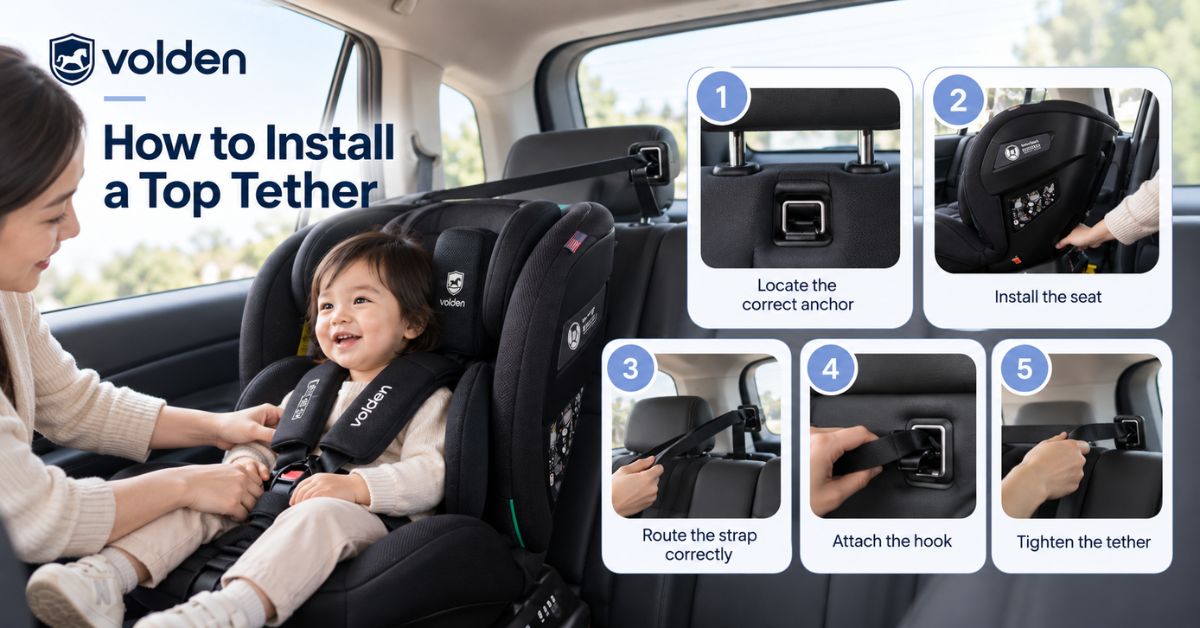
Check the vehicle owner’s manual to identify the top tether anchor for the seating position where the car seat will be installed.
Secure the car seat with either the lower anchors or the vehicle seat belt, according to the car seat manufacturer’s instructions.
Do not combine installation methods unless the car seat manufacturer specifically allows it.
Route the top tether strap over, under, or around the vehicle head restraint as directed for that seating position.
Do not change the tether routing on your own, as an incorrect path may affect the angle and performance of the tether.
Connect the tether hook to the designated anchor specified by the vehicle manufacturer.
Remove slack from the tether strap according to the car seat instructions, then check the car seat again to make sure it is properly installed.
At Volden USA, we focus on child safety solutions developed with thoughtful engineering, everyday convenience, and the real-world needs of modern families in mind. When choosing a car seat, Volden encourages parents to prioritize a proper fit for the child, compatibility with the vehicle, and, most importantly, correct installation for every ride.