
news
September 10, 2026
For families with three young children, fitting three child car seats across the same back row can be a real challenge. This is especially common for families with three small children, twins plus an older sibling, or those driving a sedan, crossover, or two-row SUV.
This guide will help parents understand how to plan a three-across setup, choose compatible car seats, and avoid common mistakes when installing three child restraints side by side.
3 across car seats refers to an arrangement where three child restraint systems are installed side by side in the same row of a vehicle.
Depending on the ages and stages of the three children, the setup may include:
The goal is not simply to make all three seats physically fit. Each car seat must be installed and used correctly without interfering with the proper installation or function of the seats next to it.
Three-across configurations are commonly considered in:
A wider vehicle may make installation easier, but vehicle width alone does not determine whether 3 across car seats will work.
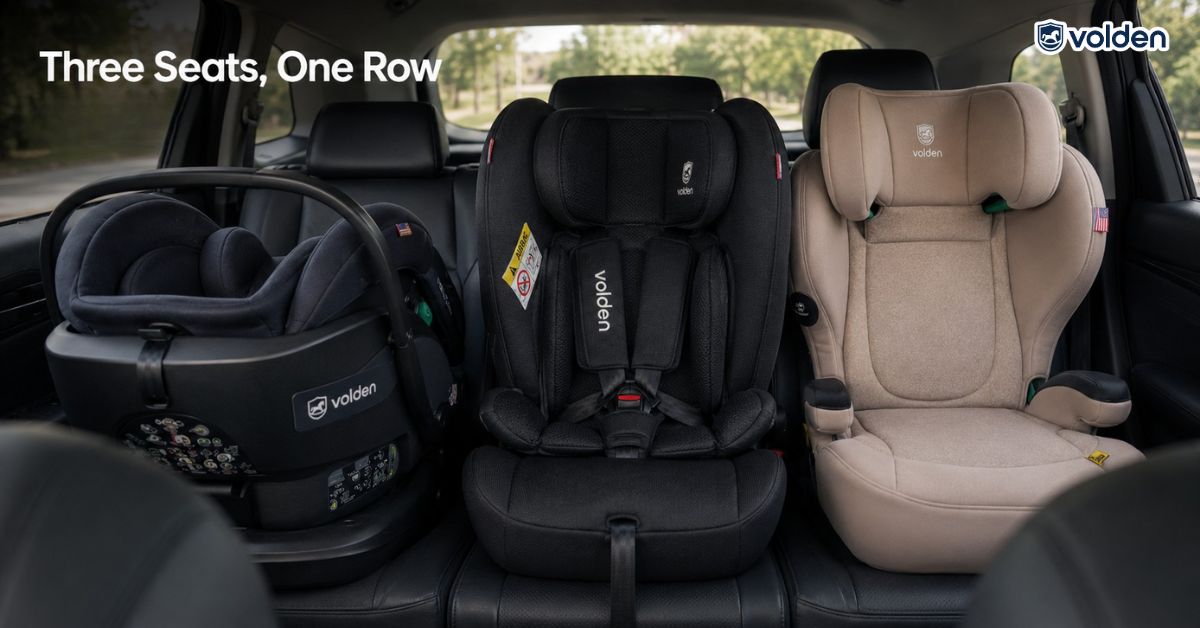
Not always.
Whether three car seats can fit across depends on the combination of:
Vehicle + car seat + seating position + installation method.
Two vehicles with nearly identical rear-seat widths can produce very different results because of differences in seat cushion design, buckle locations, lower anchor placement, and door shape.
Before purchasing 3 across car seats, parents should check:
For this reason, simply adding together the listed widths of three car seats is not enough to determine whether a three-across setup will work.
When space is limited, even a few inches can make a major difference.
Some child car seats have wide shells, large side-impact protection wings, fixed cup holders, or broad bases. These designs may work well in a large SUV but can make side-by-side installation more difficult in a sedan or compact SUV.
Narrow car seats for 3 across are generally designed to use back-seat space more efficiently.
However, parents should not focus only on the seat’s widest measurement.
The base is the part of the car seat that sits directly on the vehicle seat cushion.
A car seat with a narrow base may fit more closely next to another restraint, even if the upper portion of the seat is slightly wider.
A narrow base does not automatically mean a car seat will work well in a three-across configuration.
If the headrest or shoulder protection wings are too wide, they may interfere with the adjacent seat and make installation more difficult.
Car seats with different shapes can sometimes “puzzle” together more effectively than three identical models.
For example, the narrow lower portion of one car seat may fit beside the wider upper shell of another, allowing the available space to be used more efficiently.
Fixed cup holders or protruding armrests can significantly increase the amount of usable space a car seat occupies.
When comparing 3 across car seats, check whether these components are removable or designed to stay within the main profile of the seat.
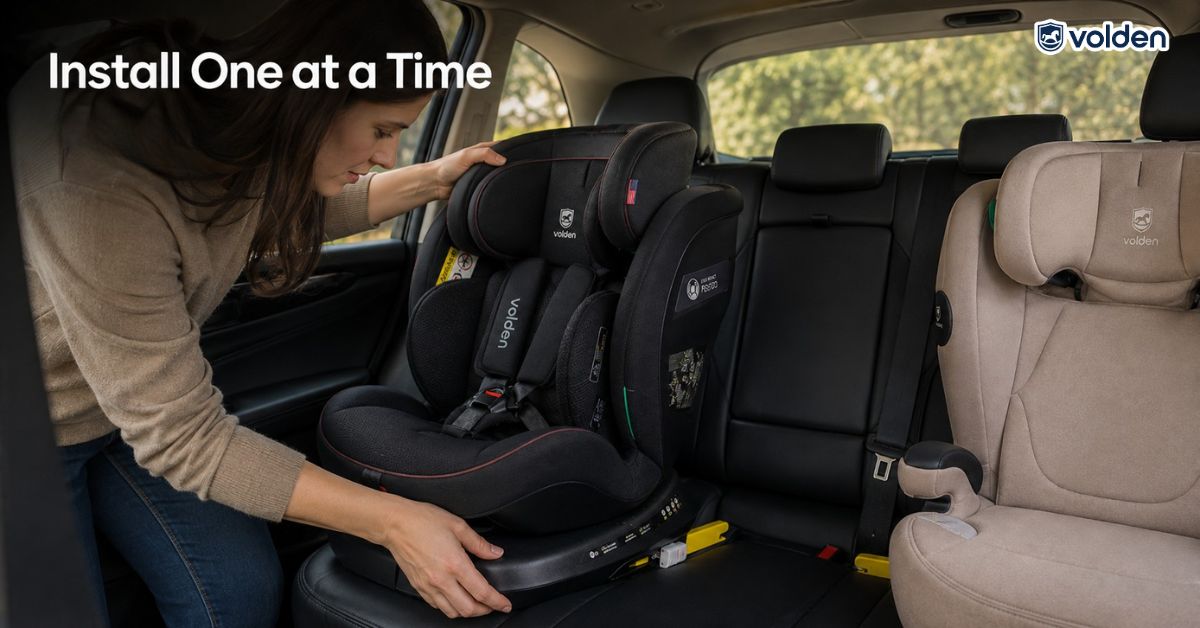
A three-across configuration should be planned one seating position at a time rather than trying to place all three car seats in the vehicle at once.
Available space should not be the main factor that determines which type of car seat a child uses.
Start by considering:
For example, one younger child may still need to ride rear-facing, while a second child may need a forward-facing seat with a harness and an older child may be ready for a booster.
A child should not be moved into a booster too early simply because booster seats are usually more compact.
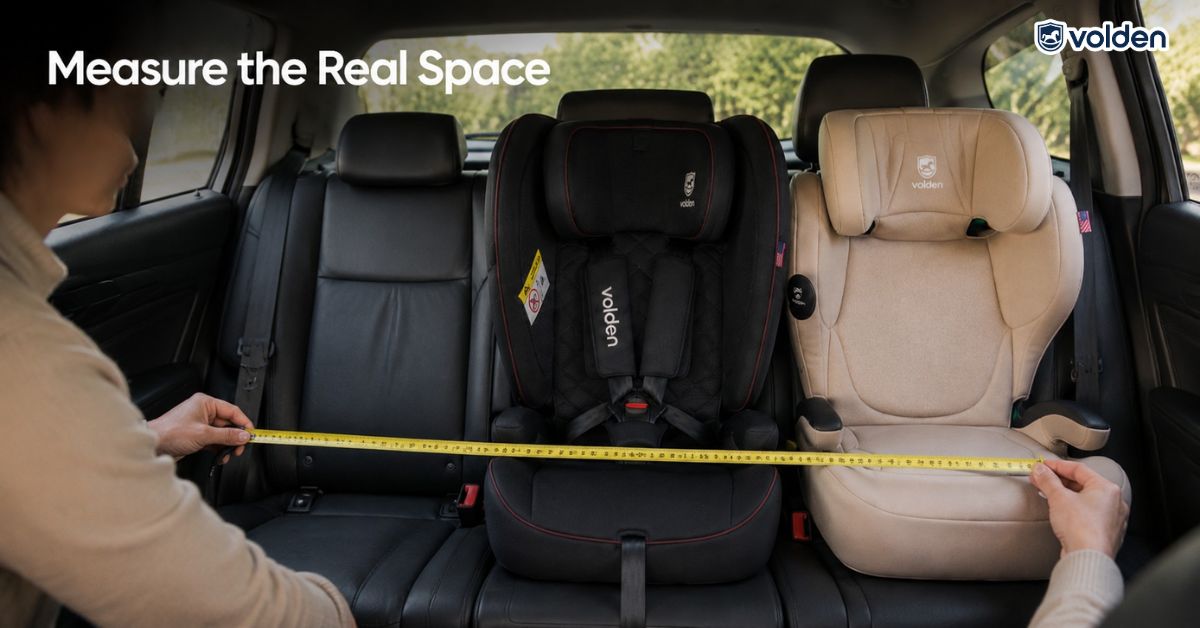
Do not measure only from one door to the other. Instead, measure the portion of the vehicle seat that can actually support the child restraints.
Pay particular attention to:
If your setup includes a rear-facing car seat, front-to-back cabin space is also important because the seat must have enough room to be positioned correctly.
Booster seats create their own challenges.
Unlike a harnessed car seat that usually remains secured in place, a child using a booster must access and buckle the vehicle seat belt on every trip.
In a tight three-across configuration, make sure:
A booster may be narrow enough to fit physically but still may not be practical if the child cannot use the seat belt correctly.
| Criteria | Why It Matters |
| Height and weight limits | Helps ensure the car seat matches the child’s current stage |
| Base width | Determines how much vehicle seating surface the car seat occupies |
| Shoulder and headrest width | Affects how closely multiple car seats can fit together |
| Rear-facing depth | Especially important in sedans and compact SUVs |
| Lower anchor locations | Affects whether LATCH installation is practical |
| Seat belt and buckle locations | Especially important for boosters and seat belt installation |
| Real-world vehicle testing | Measurements on paper do not guarantee compatibility |
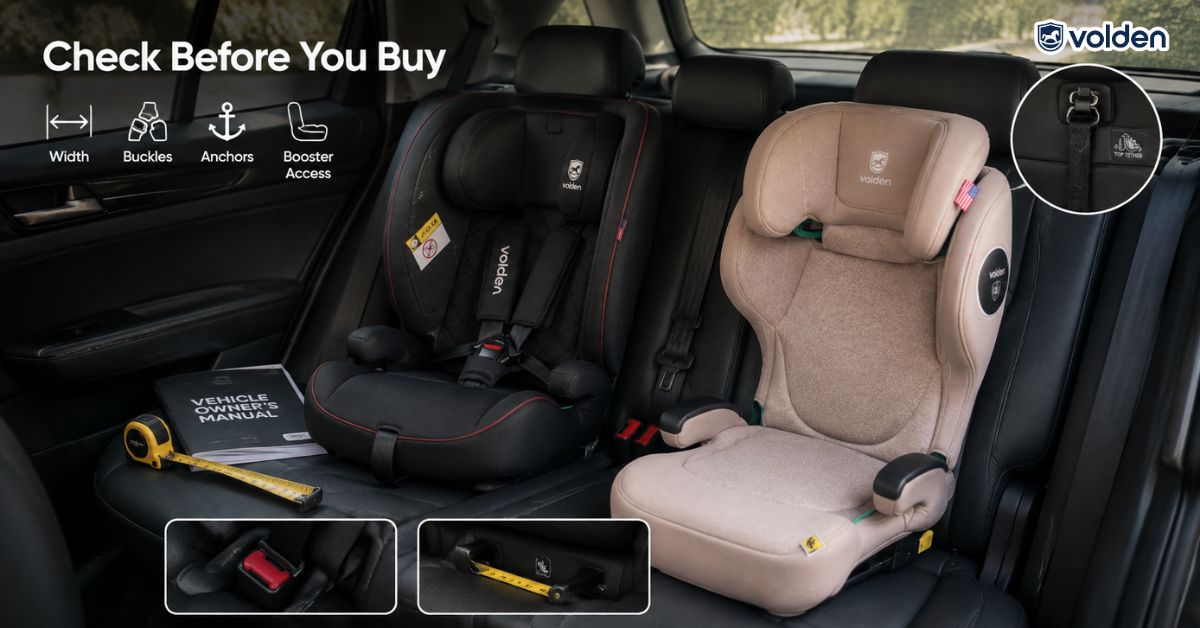
When looking for 3 across car seats, parents can explore solutions from Volden USA while focusing on four key factors: the child’s size and developmental stage, available back-seat space, vehicle compatibility, and correct installation.