
news
September 10, 2026
When flying with a young child, many parents wonder whether they can bring a car seat on airplane and use it directly in a passenger seat. The answer is yes, but the car seat must meet the requirements for aircraft use and be installed according to the manufacturer’s instructions. Not every type of child car seat is suitable for use in an airplane cabin, especially booster seats.
Here’s what parents should know before bringing a car seat on a flight in the United States.
Yes. A child can use a car seat on airplane if the restraint is approved for aircraft use and complies with the airline’s policies.
For flights in the United States, parents should check whether the car seat has a label stating that it is approved for use in both motor vehicles and aircraft. If the seat was manufactured under standards outside the United States, parents should confirm whether its certification is accepted by the airline and the relevant aviation authorities.
One important point to remember is that a car seat approved for use in a vehicle is not automatically approved for use on an airplane.
If you plan to install a car seat in a passenger seat, your child will also need their own purchased seat on the flight.
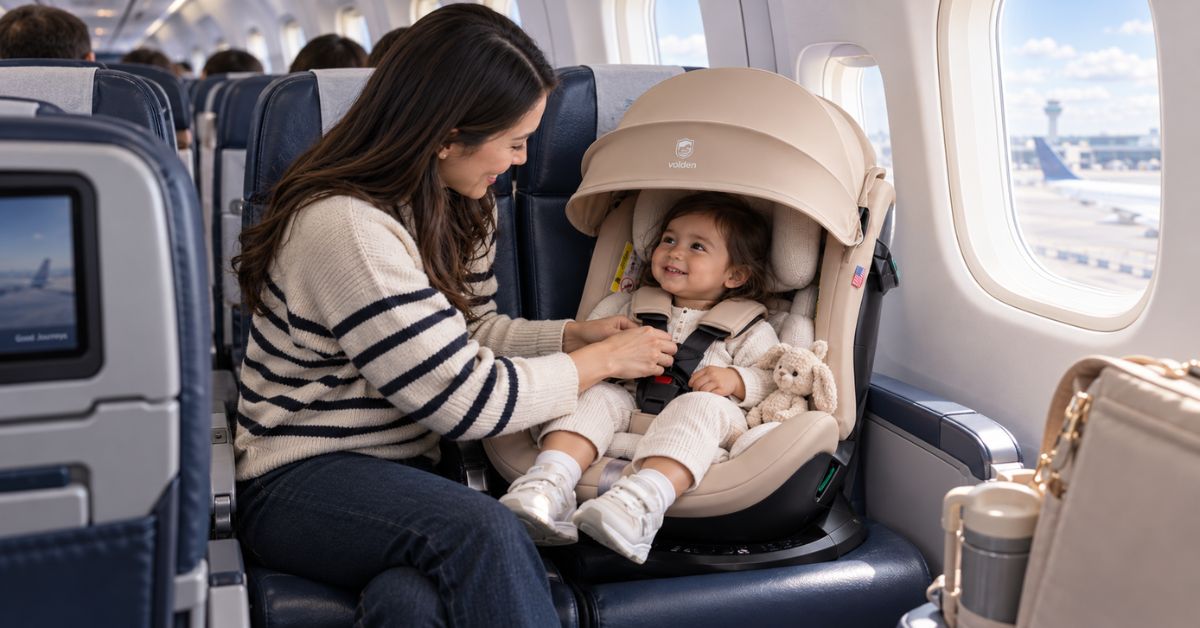
Airplane seats are equipped with lap belts designed for adults, but these restraints are not specifically designed for the smaller bodies of infants and young children.
Using an appropriate car seat on airplane can offer several benefits:
In the United States, children under age 2 may be allowed to travel as lap infants on many flights. However, using an approved child restraint system in a separate passenger seat is still an option parents may want to consider for added safety.
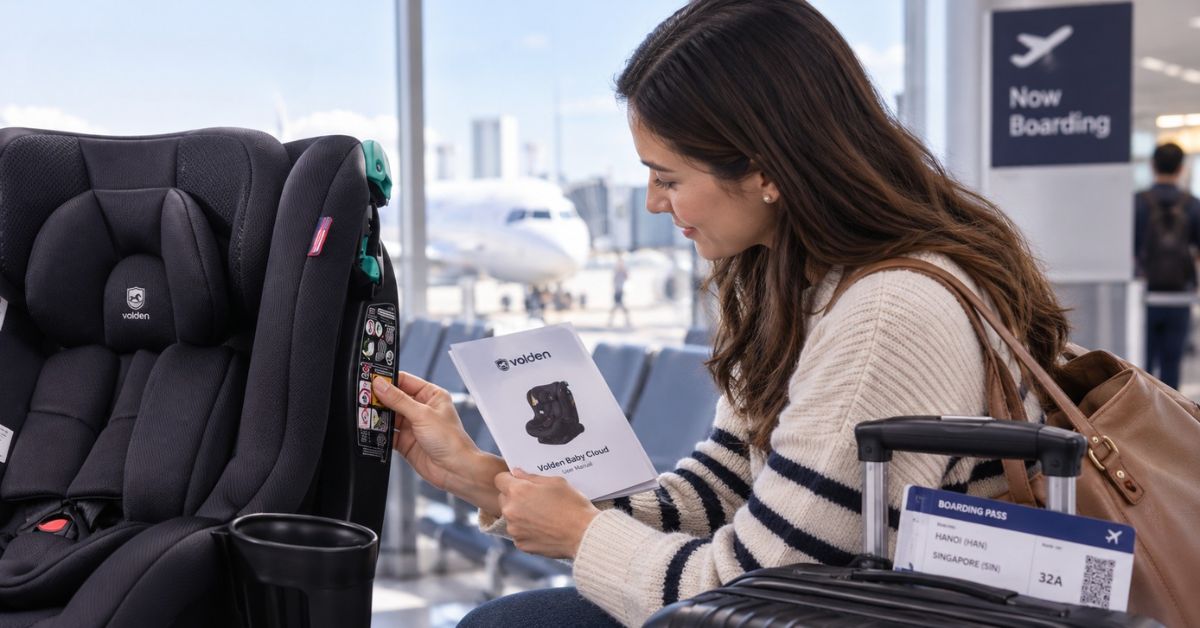
Before heading to the airport, carefully check the certification label on the car seat rather than relying only on the product name or marketing information.
Many car seats sold in the United States include wording similar to:
“This restraint is certified for use in motor vehicles and aircraft.”
If this statement appears on the seat, the restraint is certified for use in both vehicles and aircraft within the scope of its approval.
It is also a good idea to take a photo of the certification label before your trip. This can make it easier to show airline staff if verification is needed at the airport or during boarding.
Even if your car seat has the proper certification, you should still review your airline’s requirements, including:
Airline policies and operational requirements can vary.
A window seat is one of the most common locations for installing a car seat on airplane. Placing the car seat by the window generally reduces the chance that it will block another passenger’s access to the aisle during an evacuation.
Parents should avoid:
If you are traveling with more than one child who needs a car seat, contact the airline in advance to ask about appropriate seating arrangements.
Yes, a rear-facing car seat may be used if it is approved for aircraft use, appropriate for your child, and installed according to the manufacturer’s instructions.
For infants and younger children, parents should not switch to forward-facing simply because they are flying if the car seat instructions still require or recommend rear-facing use for the child.
However, airplane cabins have limited space. When choosing a car seat on airplane, check the seat’s width and depth as well as the airline’s seat dimensions and seat pitch before traveling.
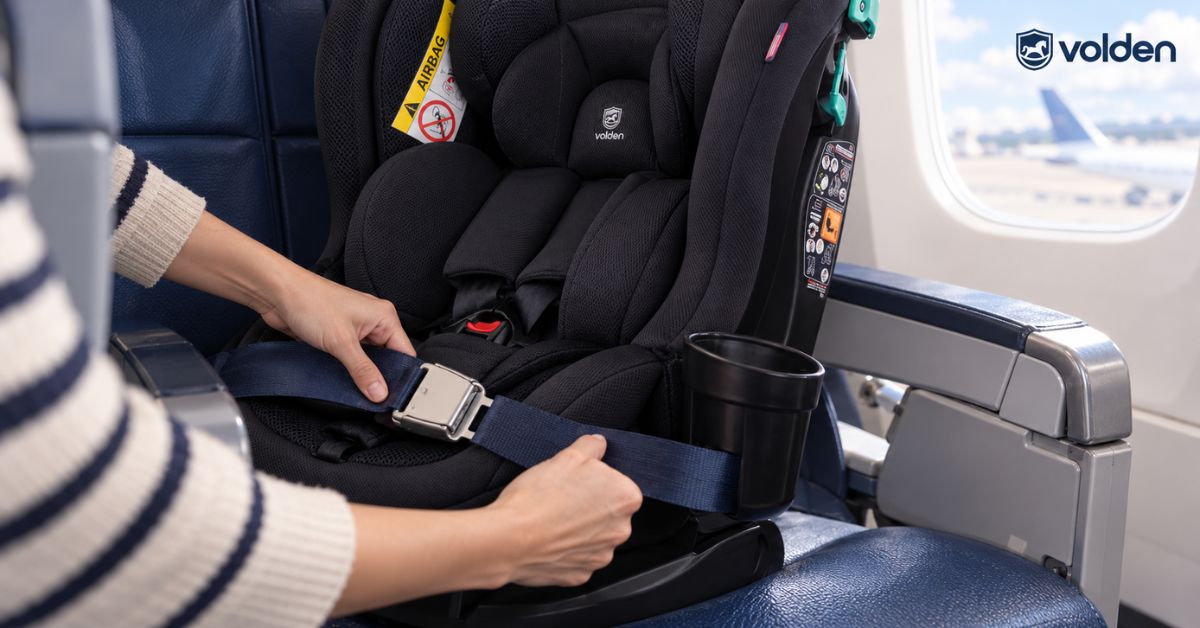
Installing a car seat on an airplane is often more straightforward than installing one in a vehicle because most airplane passenger seats use a lap belt.
Position the seat rear-facing or forward-facing according to the child’s height, weight, and the manufacturer’s instructions.
Thread the airplane lap belt through the designated belt path on the car seat.
Do not create your own belt-routing method if it is not specified in the car seat manual.
Pull the lap belt tight so the car seat is firmly secured to the passenger seat.
Place your child in the seat and adjust the harness to the correct position and fit according to the manufacturer’s instructions. Avoid adding cushions, straps, or accessories that have not been approved by the car seat manufacturer.
Parents can check a car seat as baggage if they do not plan to use it in the cabin. However, checked car seats may be exposed to impacts or rough handling during baggage transportation.
If your child has their own passenger seat and the car seat is approved for aircraft use, using it in the cabin may offer several advantages:
If you need to check the car seat, consider using a protective travel bag and carefully inspect the seat after the flight before installing it in a vehicle.
At Volden.usa, we focus on child safety solutions designed for modern family journeys. When choosing a car seat, parents should consider not only everyday use in the car but also how well the product fits their travel needs.
If you plan to bring a car seat on an airplane, always verify the specific aircraft-use certification of the product and review your airline’s requirements before booking your trip and heading to the airport.