

news
September 10, 2026
When traveling with young children in the United States, parents cannot rely on one universal car seat rule nationwide. Car seat laws by state can vary significantly based on a child’s age, height, weight, and the required use of rear-facing car seats, forward-facing car seats, and booster seats. As a result, a car seat setup that is legal in one state may not meet the requirements in another.
This guide helps parents quickly understand the basic car seat requirements in each state and choose the appropriate child restraint system for their child. Keep in mind that some states may have additional exceptions depending on the vehicle type or specific circumstances.
No. Each state sets its own rules for when children must use a child restraint system, car seat, or booster seat.
Some states mainly base their requirements on a child’s age, while others also consider:
However, state laws generally represent only the minimum legal requirement. From a safety standpoint, children should remain in each stage of car seat use until they reach the height or weight limits specified by the manufacturer rather than moving to the next stage simply because they have reached a certain age.

The table below summarizes the main car seat requirements in each state. Washington, D.C. is also included because it is a common destination for families traveling within the U.S.
| State | Main Car Seat Requirement |
| Alabama | Rear-facing under age 1/20 lb; forward-facing ages 1–4; booster around age 5 until before age 6. |
| Alaska | Rear-facing under age 1 or under 20 lb; children under 57 in or below the applicable weight threshold may need a restraint or booster. |
| Arizona | Children age 4 and younger need a restraint; ages 5–7 and 57 in or shorter need a booster or restraint. |
| Arkansas | Children age 5 and younger and under 60 lb need a child restraint. |
| California | Rear-facing under age 2 unless the child reaches 40 lb or 40 in; children under age 8 and under 57 in need an appropriate restraint. |
| Colorado | Rear-facing under age 2 and under 40 lb; ages 2–3 use a child restraint; ages 4–8 use a restraint or booster. |
| Connecticut | Rear-facing under age 2 or 30 lb; ages 2–4 use a harness; ages 5–7 and 40–60 lb use a harness or booster. |
| Delaware | Rear-facing under age 2 and 30 lb; under age 4/40 lb use a harness; then follow booster limits. |
| Florida | Children age 5 and younger need a child restraint; children under age 4 must use an appropriate harnessed seat. |
| Georgia | Children age 7 and younger and 57 in or shorter need a child restraint. |
| Hawaii | Rear-facing under age 2; ages 2–3 use a restraint; ages 4–9 may need a harness or booster depending on height. |
| Idaho | Children age 6 and younger must use a child restraint. |
| Illinois | Rear-facing under age 2 unless the child reaches 40 lb or 40 in; children age 7 and younger need a restraint. |
| Indiana | Children age 7 and younger need a child restraint. |
| Iowa | Rear-facing under age 1 and under 20 lb; ages 1–5 use a restraint or booster. |
| Kansas | Under age 4 use a restraint; ages 4–7 need a booster or restraint if under 80 lb or under 57 in. |
| Kentucky | Children 40 in or shorter need a restraint; children age 7 and younger who are 40–57 in tall need a booster. |
| Louisiana | Rear-facing under age 2; forward-facing ages 2–3; approximately ages 4–8 use a booster according to seat limits. |
| Maine | Rear-facing under age 2; children under 55 lb use a harness; children under age 8, 80 lb, and 57 in may need a booster. |
| Maryland | Rear-facing under age 2 until reaching the seat limit; children age 7 and younger and under 57 in need a child restraint. |
| Massachusetts | Children age 7 and younger and under 57 in need a child restraint. |
| Michigan | Rear-facing under age 2; forward-facing ages 2–4; ages 5–7 use a booster if under 57 in. |
| Minnesota | Rear-facing under age 2; then transition according to seat limits; children around ages 4–8 generally need a booster. |
| Mississippi | Children age 3 and younger use a restraint; ages 4–6 under 57 in or 65 lb need a booster. |
| Missouri | Children age 3 and younger or under 40 lb use a restraint; ages 4–7, 40–80 lb, and 4’9″ or shorter need a restraint or booster. |
| Montana | Rear-facing under age 2; ages 2–3 use a restraint; ages 4–7 use a forward-facing seat or booster. |
| Nebraska | Rear-facing under age 2 until reaching the seat limit; children age 7 and younger need a child safety seat. |
| Nevada | Rear-facing under age 2; children age 5 and younger and under 57 in need a restraint. |
| New Hampshire | Rear-facing under age 2; children age 6 and younger and under 57 in need a restraint. |
| New Jersey | Rear-facing under age 2/30 lb; under age 4/40 lb use a harness; under age 8 and 57 in use a restraint or booster. |
| New Mexico | Rear-facing under age 1; ages 1–4 or under 40 lb use a restraint; ages 5–6 or under 60 lb use a booster. |
| New York | Rear-facing under age 2 until reaching the seat limit; under age 4 use a restraint; ages 4–7 use an appropriate restraint. |
| North Carolina | Children age 7 and younger and under 80 lb need a child restraint. |
| North Dakota | Children age 7 and younger and under 57 in need a child restraint. |
| Ohio | Children age 3 and younger or under 40 lb use a restraint; ages 4–7, at least 40 lb but under 57 in, need a booster or restraint. |
| Oklahoma | Rear-facing under age 2; under age 4 use a restraint; ages 4–7 and 4’9″ or shorter need a booster or restraint. |
| Oregon | Rear-facing under age 2; children age 7 and younger need a restraint or booster depending on weight and height. |
| Pennsylvania | Rear-facing under age 2; ages 2–3 use a forward-facing seat; ages 4–7 use a booster. |
| Rhode Island | Rear-facing under age 2 or under 30 lb; children age 7 and younger under 57 in/80 lb need a restraint. |
| South Carolina | Rear-facing under age 2; then forward-facing until reaching the seat limit; booster until at least age 8 or 57 in. |
| South Dakota | Children age 4 and younger and under 40 lb need a child restraint. |
| Tennessee | Rear-facing under age 1/20 lb; forward-facing ages 1–3; ages 4–8 under 4’9″ use a booster. |
| Texas | Children age 7 and younger and under 57 in need a child safety seat. |
| Utah | Children age 7 and younger and under 57 in need a child restraint. |
| Vermont | Rear-facing under age 2; ages 3–4 use a restraint; ages 5–7 use a restraint or booster. |
| Virginia | Rear-facing under age 2 according to seat limits; children age 7 and younger need a child safety seat. |
| Washington | Rear-facing under age 2; under age 4 use a harness after outgrowing rear-facing limits; over age 4 and under 4’9″ use a booster. |
| West Virginia | Children age 7 and younger and under 4’9″ need a child restraint. |
| Wisconsin | Rear-facing under age 1 and under 20 lb; ages 1–3 use a restraint; ages 4–7, 40–80 lb, and under 57 in need a booster or restraint. |
| Wyoming | Children age 8 and younger must use an appropriate child restraint. |
| District of Columbia | Rear-facing under age 2; children age 3 and younger need a restraint; ages 4–7 use a restraint or booster. |
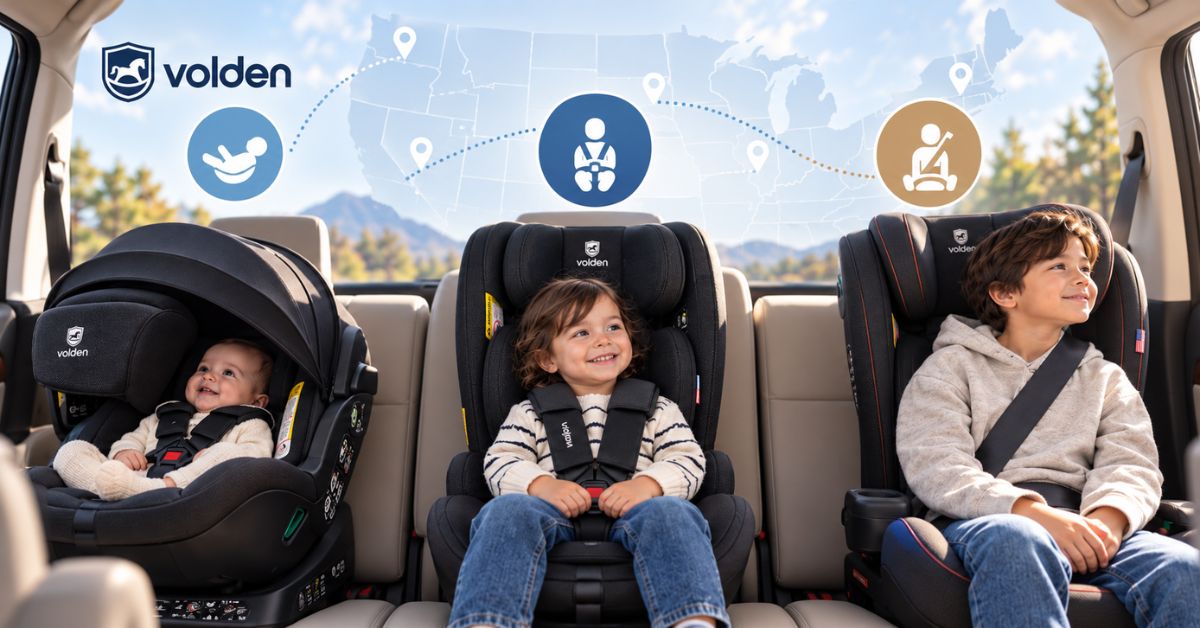
Rear-facing car seats are designed for younger children. Parents should keep children rear-facing for as long as possible within the height and weight limits of the car seat, even if state law allows them to transition earlier.
Once a child exceeds the rear-facing limits of the car seat, they may transition to a forward-facing seat with an appropriate harness system.
Parents should not make the switch based only on age if the child still fits within the rear-facing limits specified by the car seat manufacturer.
A booster seat raises the child so the vehicle’s three-point seat belt fits correctly across the shoulder, chest, and hips.
Children who are not yet large enough for the vehicle seat belt to fit properly should continue using a booster seat.
If your family is taking a road trip or traveling across state lines, do not check only the laws in your home state. Car seat laws by state can change as soon as you enter another state.
A practical approach is to:
Some states may also have specific rules regarding back-seat placement, airbags, vehicle type, or legal exemptions. Before a long trip, parents should review the latest requirements from the transportation or highway safety agency in each state they plan to visit.

No. This is an important distinction when researching car seat laws by state.
Car seat laws establish the minimum legal requirements that parents must follow. Safety recommendations, however, focus on keeping children in each stage of protection for as long as their car seat safely allows.
For example, a state may legally allow a child to transition to a vehicle seat belt at a certain age. However, if the shoulder belt still crosses the child’s neck or the lap belt rests across the abdomen instead of low across the hips, the child may not yet be ready to use the vehicle seat belt alone.
Car seat laws by state do not follow one single age requirement across the United States. Some states rely mainly on age, while others also consider height, weight, and car seat manufacturer limits.
Parents should treat state law as the minimum legal standard while also choosing a child restraint system that fits their child’s actual size and stage of development.
At Volden USA, parents can continue exploring practical guidance on choosing the right car seat by age and height, proper installation, and everyday child passenger safety to help make every family journey safer and more comfortable.