news
September 10, 2026
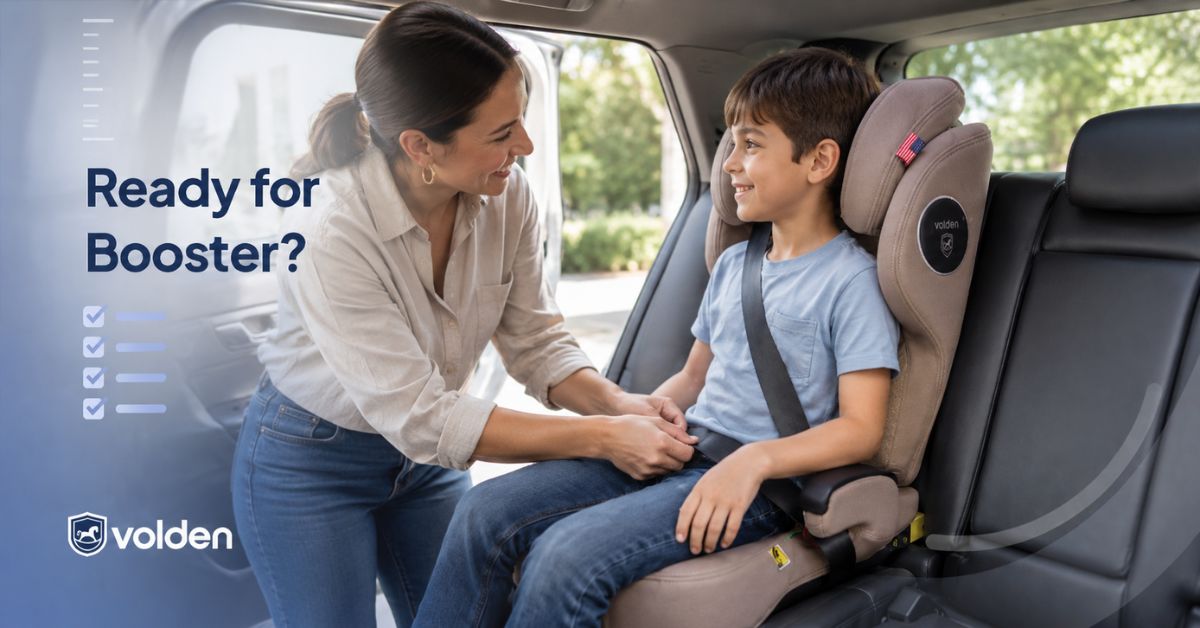
A booster seat is designed for children who have outgrown a harnessed car seat but are still too small for the vehicle’s seat belt to fit properly on its own. Instead of relying only on age, parents should also consider their child’s height, weight, ability to sit correctly, and especially how the seat belt fits across the child’s body.
So, when does a child need a booster seat, should you choose a high-back or backless booster, and when can your child stop using one? Volden explains the key factors parents should consider.
A booster seat raises a child’s seating position so the vehicle’s three-point seat belt fits properly across the body.
Unlike car seats with an integrated 5-point harness, most booster seats use the vehicle’s own lap-and-shoulder belt to restrain the child.
When used correctly:
Simply put, a booster seat helps bridge the gap between a child’s smaller body and a seat belt designed for adults.
A child should not move to a booster seat simply because they have reached a certain age. In general, a booster becomes appropriate after the child has outgrown the height or weight limits of a forward-facing car seat with a harness and can remain seated correctly for the entire trip.
Parents should check the following four factors.
Check the maximum height and weight allowed for harness use on the child’s current car seat.
If your child is still within the limits of a forward-facing harnessed seat, there is usually no need to rush into a booster just because they meet the minimum requirements of a booster model.
Every booster seat has its own specifications, including:
Parents should always follow the specifications of the specific booster model rather than applying one general rule to every product.
With a booster seat, proper seat belt positioning depends heavily on how the child sits.
The child should be able to:
If your child cannot maintain this position, moving to a booster may be too early.
The same booster seat may fit differently in different vehicles.
Parents should check:
A child should continue using a booster seat until the vehicle seat belt fits properly without the extra height provided by the booster.
Age alone should not determine when to stop using one.
Parents can check the following:
If the lap belt still sits across the stomach or the shoulder belt runs too close to the neck, the child may still need a booster seat to improve seat belt positioning.
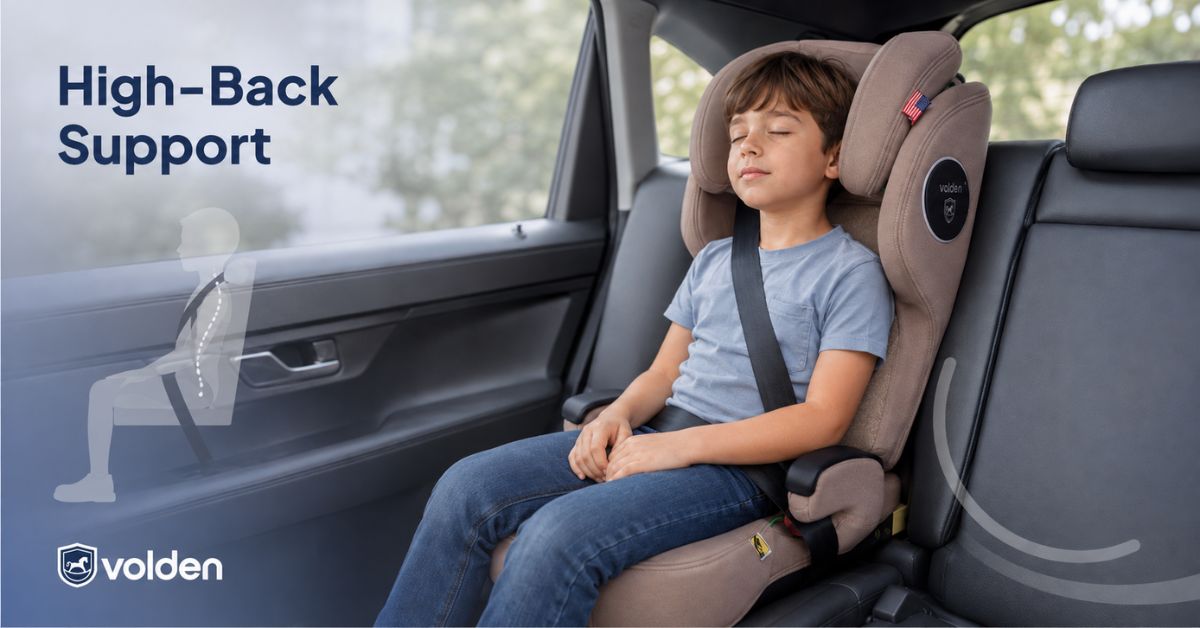
The two most common types of booster seats are high-back boosters and backless boosters.
A high-back booster includes a backrest and headrest and usually has shoulder belt guides to help keep the seat belt properly positioned.
This type may be a good choice for families looking for:
A high-back booster can also be a practical choice during the early stage of transitioning from a harnessed car seat to a booster.
A backless booster includes only the raised seating base without a separate backrest.
Common benefits include:
However, the vehicle seat must provide adequate back and head support for the child.
Do not choose based on appearance alone.
A high-back booster can be useful when a child needs more positioning and posture support. A backless booster may work well for an older child when the vehicle already provides adequate head support.
The most important factor is still how well the seat belt fits the child.
When shopping for a booster seat, parents should focus on five key factors rather than comparing only price or the number of features.
Check the manufacturer’s limits for:
Never use a booster outside the manufacturer’s approved range.
This is one of the most important considerations.
When the child is seated in the booster:
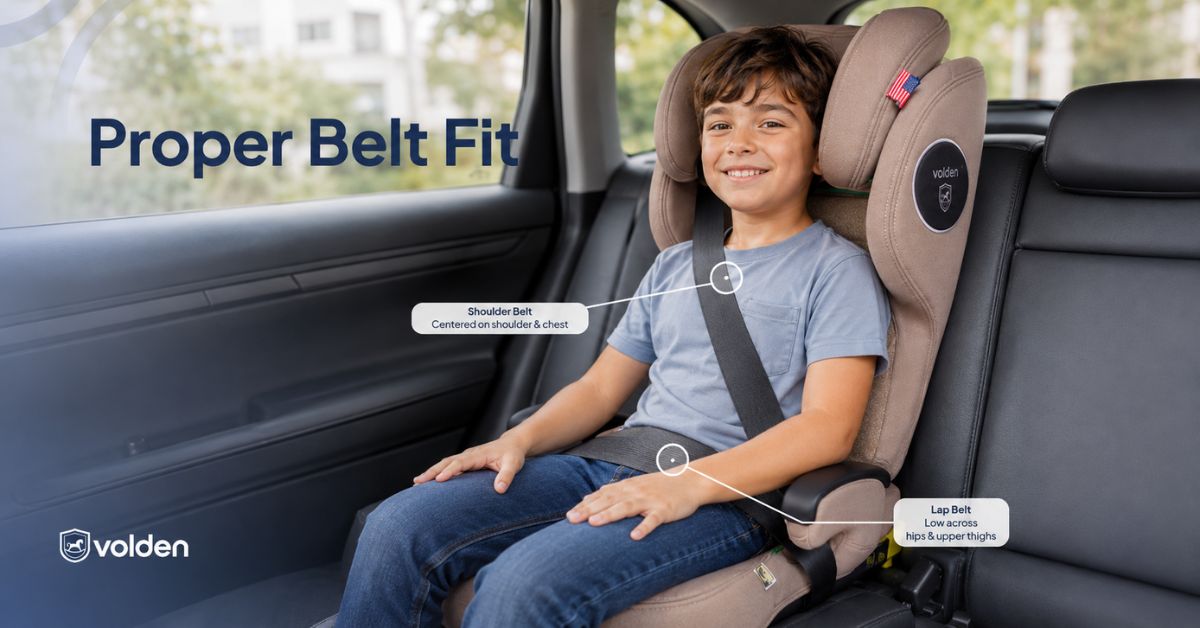
Lap belt: It should sit low across the hips and upper thighs.
Shoulder belt: It should cross the center of the shoulder and chest.
If the shoulder belt is too close to the neck or the lap belt still rests across the stomach, the booster may not provide the right fit for that child and vehicle.
Before choosing a booster, consider:
This is especially important for families who need to fit three child seats across one row. A slim booster seat may make the arrangement easier.
A high-back booster may be more practical if the child is new to booster use or often sleeps in the car.
For an older child who sits consistently in the correct position and rides in a vehicle with adequate head support, a backless booster may offer a more compact option.
A booster that is easy to use correctly every day is often more practical than a complicated product with unnecessary features.
Useful features may include:
Not every booster seat requires LATCH.
Some models include LATCH connectors or lower anchors to help keep the booster secured to the vehicle seat. Other models do not use this system.
The key point is that with a belt-positioning booster, the vehicle’s three-point seat belt is what restrains the child.
If the booster includes LATCH, parents should install it according to both the booster manufacturer’s instructions and the vehicle owner’s manual.
Do not change the installation method or assume that all boosters use LATCH in the same way.
After choosing the right booster, parents should check the setup before every trip.
Use a rear seating position with a three-point seat belt that meets the requirements listed in the booster seat instructions.
The child’s hips and back should remain properly positioned against the booster and vehicle seat.
Route the seat belt through the correct belt guides if the booster includes them.
The lap belt should sit low across the hips and upper thighs, not across the stomach.
The shoulder belt should cross the center of the shoulder and chest without touching the neck or slipping off the shoulder.
The child should be able to maintain the correct seating position for the entire ride.
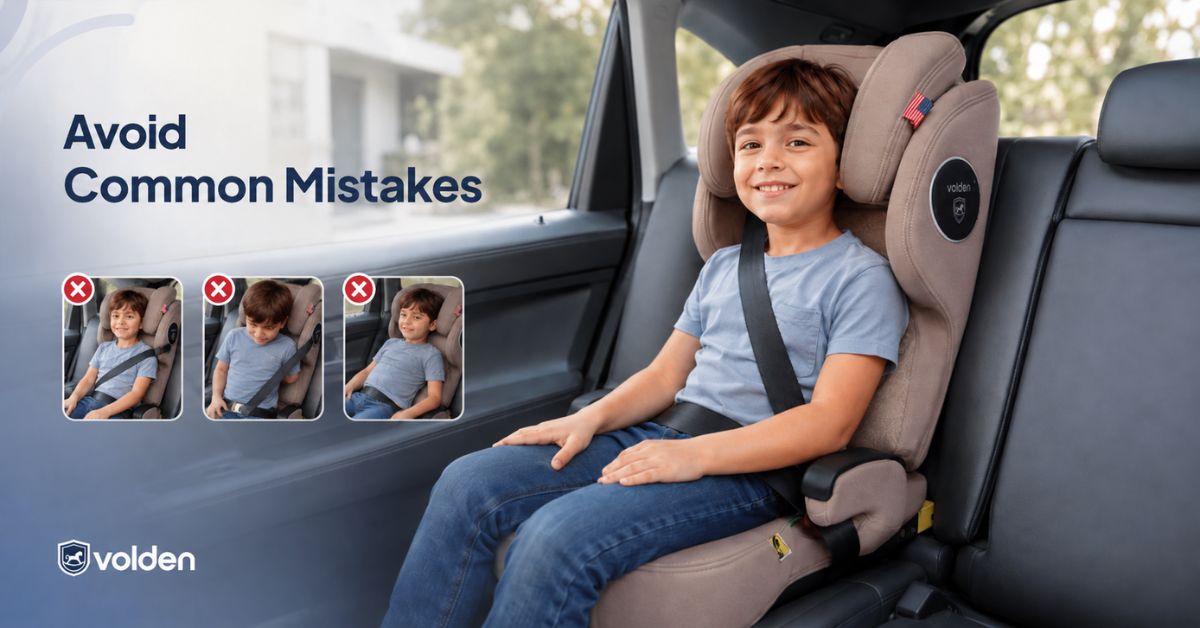
Parents should avoid common mistakes such as:
A booster can only work as intended when the child fits the seat and the seat is used correctly.
A booster seat is not simply a seat for older children. Its primary purpose is to help the vehicle seat belt fit a child’s body correctly after the child has outgrown a harnessed car seat but before they are large enough to use an adult seat belt alone.
When choosing a booster seat, parents should focus on four key factors: the child’s size, seat belt fit, vehicle compatibility, and the child’s ability to maintain the correct seating position.
Rather than moving to the next stage based on age alone, choose based on how well the restraint fits your child in real-world use. At Volden, child safety products are developed with a focus on engineering, innovation, quality, and long-term reliability—helping families find practical solutions for safer everyday journeys.