
news
September 10, 2026
Choosing the best convertible car seat is not simply about finding the model with the most features or the highest price tag. The right car seat should meet three important criteria: it should fit your child’s height and weight, fit properly in your vehicle, and be easy to install and use correctly on every trip.
Convertible car seats are especially popular among families in the U.S. because they can be used through multiple stages of a child’s development, from rear-facing to forward-facing. If you are unsure which model to choose, start with the key factors below.
A convertible car seat is a child safety seat designed to accommodate different riding positions as your child grows. Most convertible car seats include at least two modes:
Some all-in-one models can later convert into a booster seat for older children. Traditional convertible car seats, however, mainly focus on the rear-facing and forward-facing stages.
One of the biggest advantages of a convertible car seat is its longer usable lifespan. Instead of replacing the seat too soon, families may be able to use the same seat for several years as long as the child remains within the manufacturer’s stated height, weight, and usage limits.
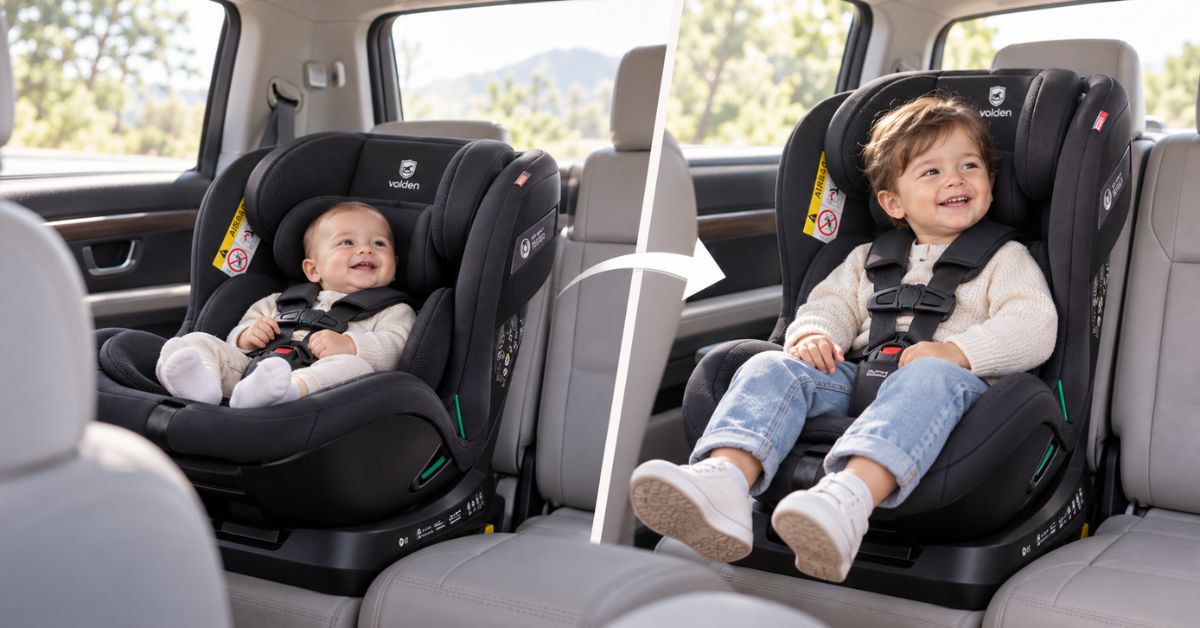
There is no single car seat that is best for every child and every vehicle. When looking for the best convertible car seat, parents should focus on real-world fit and usability rather than simply comparing feature lists.
Height and weight limits should be among the first specifications you review.
Every convertible car seat has separate limits for rear-facing and forward-facing use. Choosing a seat with a generous range can help prevent your child from outgrowing it too quickly.
Parents should not switch a child to forward-facing based on age alone. Instead, check:
A seat with a higher rear-facing capacity may allow your child to remain rear-facing longer before moving to the next stage.
For younger children, rear-facing capability is one of the most important factors when choosing a convertible car seat.
Instead of asking only, “At what age can my child face forward?” parents should check when the child actually reaches the rear-facing height or weight limit of the specific seat.
For this reason, the best convertible car seat for a younger child should offer:
These features can help the seat adapt to a child’s growth over time.

When purchasing a car seat for use in the United States, parents should check the certification labels and instructions provided with the actual product, rather than relying only on marketing claims such as “European standard” or “international safety.”
A car seat designed or approved for another market should not automatically be assumed to meet the requirements for use in the United States.
Before buying, check:
When considering a product from Volden USA, parents should also review the certification and specification information listed for each individual model.
Even a well-designed convertible car seat can be inconvenient if it is too large for your vehicle.
This can be especially important for compact sedans, smaller SUVs, or families that need to install multiple car seats in the same row.
Before purchasing, consider the following.
Convertible car seats often take up more front-to-back space when installed rear-facing. Check whether the seat forces the driver or front passenger seat too far forward.
If you need to install two or three child restraints across the back seat, a slimmer car seat design may be more practical.
Not every seating position has the same LATCH configuration. Always check both your vehicle owner’s manual and the car seat manual before choosing an installation location.
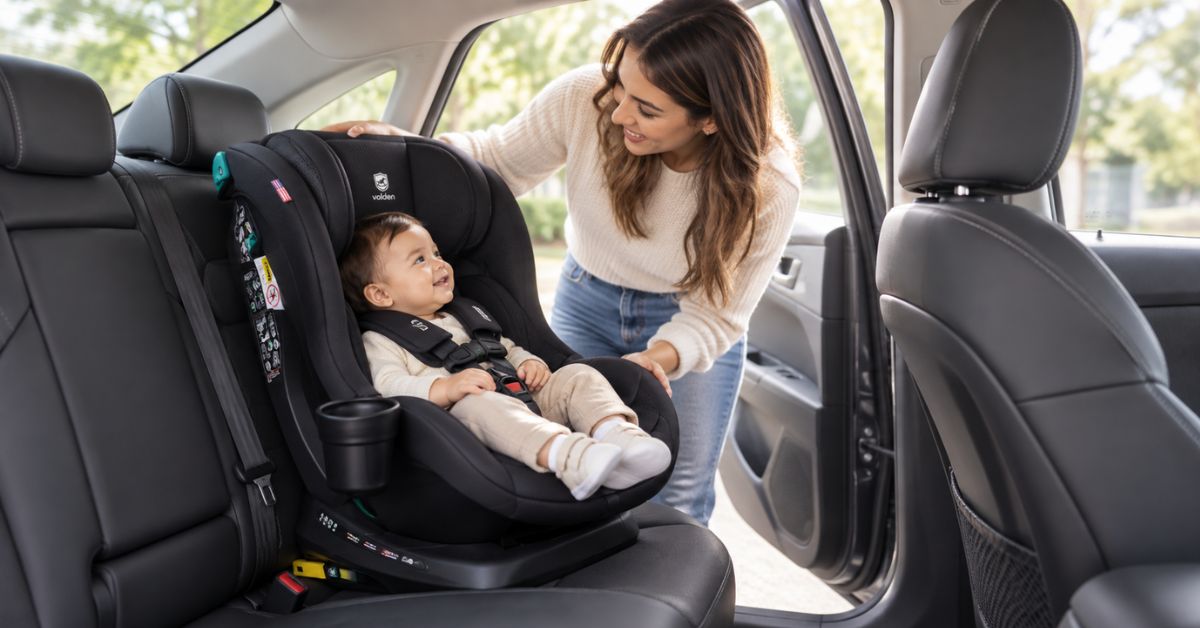
One of the most important qualities of the best convertible car seat is that it helps parents achieve a secure installation.
Depending on the seat, the child’s stage, and the manufacturer’s instructions, a car seat may be installed using LATCH or the vehicle seat belt.
Helpful design features may include:
A long list of extra features cannot make up for a seat that is difficult to install correctly. Ease of proper use should remain a top priority.
Children grow quickly during the first several years of life. A good convertible car seat should be easy to adjust without requiring complicated rethreading or disassembly.
Useful features may include:
When securing your child, the harness should be adjusted according to the manufacturer’s instructions and should not be twisted or excessively loose.
In addition to keeping the child properly restrained, many parents searching for the best convertible car seat also consider design features intended to provide additional support around the head and torso during a side impact.
Features to look at may include:
However, parents should not judge a car seat’s safety based only on branded technology names or marketing claims. Certification, correct installation, proper fit, and correct everyday use remain more important.
Car seats are often used every day for several years. Children may spill milk, snacks, or water, and some may get carsick, so easy cleaning can make a major difference in long-term usability.
Parents may want to look for:
For families that take frequent road trips or live in warmer climates, ventilation and breathable materials may be particularly valuable.
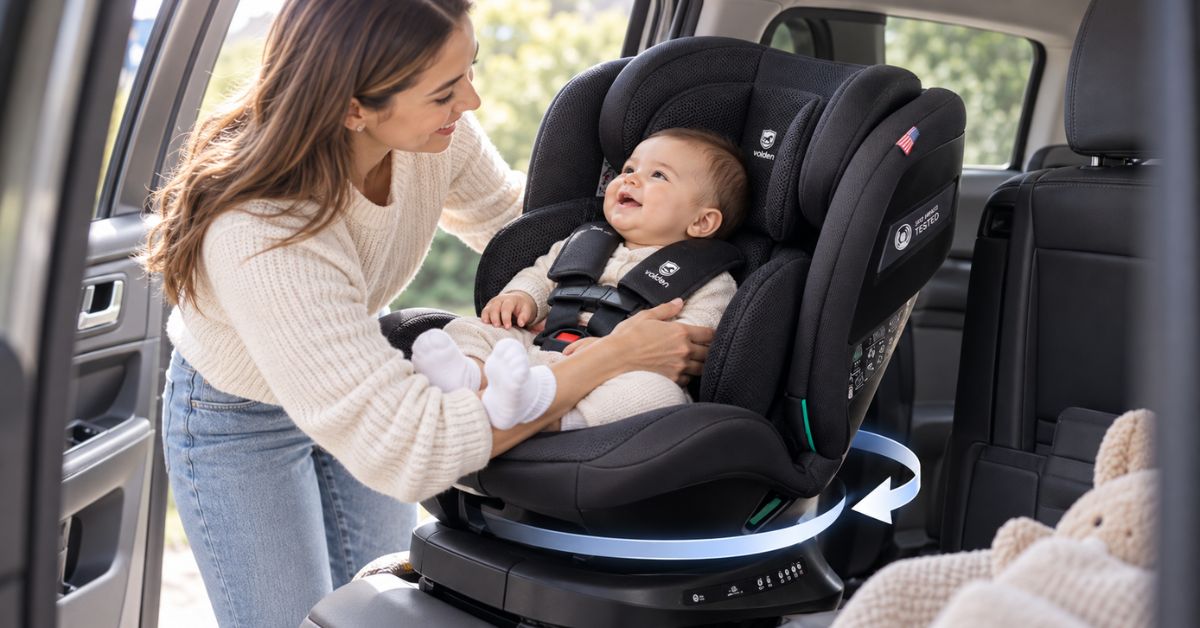
Rotating convertible car seats have become increasingly popular because they can swivel toward the vehicle door, making it easier to place a child into the seat or take them out.
This feature can be particularly useful for:
However, rotating car seats are often larger and heavier than standard convertible models. If rear-seat space is limited, check the seat dimensions carefully before purchasing.
The best convertible car seat is one that fits your child now, offers enough room for the next stage of growth, fits your vehicle, and is simple enough to use correctly on every trip. When exploring products from Volden USA, review the specifications, size limits, installation requirements, and certification information for each model to find the option that best fits your family.