

news
September 10, 2026
Knowing when to switch to booster seat is not as simple as waiting for a certain birthday. A child may be old enough to use a booster seat but still fit properly in a forward-facing car seat with a 5-point harness.
The right time to transition is when your child has outgrown the limits of the 5-point harness, meets the requirements of the booster seat, and can sit correctly with the vehicle’s lap-and-shoulder belt for the entire ride.
Before moving from a 5-point harness to a booster seat, parents can start by asking three important questions.
Check the maximum height and weight limits listed on the car seat label and in the instruction manual.
If your child is still within the forward-facing harness limits and fits the seat correctly, there is usually no need to move to a booster simply because they are another year older.
Every booster seat has its own height, weight, and sometimes minimum age requirements.
Your child should meet the specific requirements of the booster seat you plan to use. Do not assume that all booster seats have the same limits.

This is one of the most important signs of booster readiness.
A booster seat uses the vehicle’s lap-and-shoulder belt instead of an integrated 5-point harness. That means your child needs to sit upright and keep the seat belt properly positioned without constant reminders.
If the answer to any of these questions is no, your child may not be ready to move to a booster seat yet.
When deciding when to switch to booster seat, height and weight matter because both the current harnessed seat and the booster have specific usage limits.
Parents should check:
A child should not move to the next car seat stage simply because they have reached a certain age.
| Situation | Ready for a Booster? |
| Child still fits within harness limits | Usually not yet |
| Child has outgrown the harness | Check booster requirements |
| Child meets booster size requirements | Possibly |
| Child meets requirements and sits properly | Ready to consider a booster |
Two children of the same age may be ready for a booster at different times because children grow at different rates.
Physical size is only one part of determining when to switch to booster seat.
A 5-point harness helps keep a child secured in the correct position. A booster seat depends much more on the child’s ability to maintain proper posture on their own.
Before making the switch, check whether your child can:
If your child frequently changes position, leans forward to reach for things, or moves the seat belt out of place, they may need more time in a harnessed car seat.
Understanding the difference between these two restraint systems can make it easier to know when your child is ready to transition.
A 5-point harness secures the child at five points around the shoulders, hips, and between the legs.
Because the harness helps hold the child in the correct position, it relies less on the child’s ability to stay properly seated on their own.
This can be especially useful for younger children who move around frequently or change position while sleeping in the car.
A booster seat typically does not use its own harness to restrain the child.
Instead, it raises the child so the vehicle’s lap-and-shoulder seat belt can fit correctly across the body.
This means the child must be able to maintain proper sitting position throughout the ride.
That is why parents should not move to a booster simply because it seems more convenient or because the child has reached a certain age.
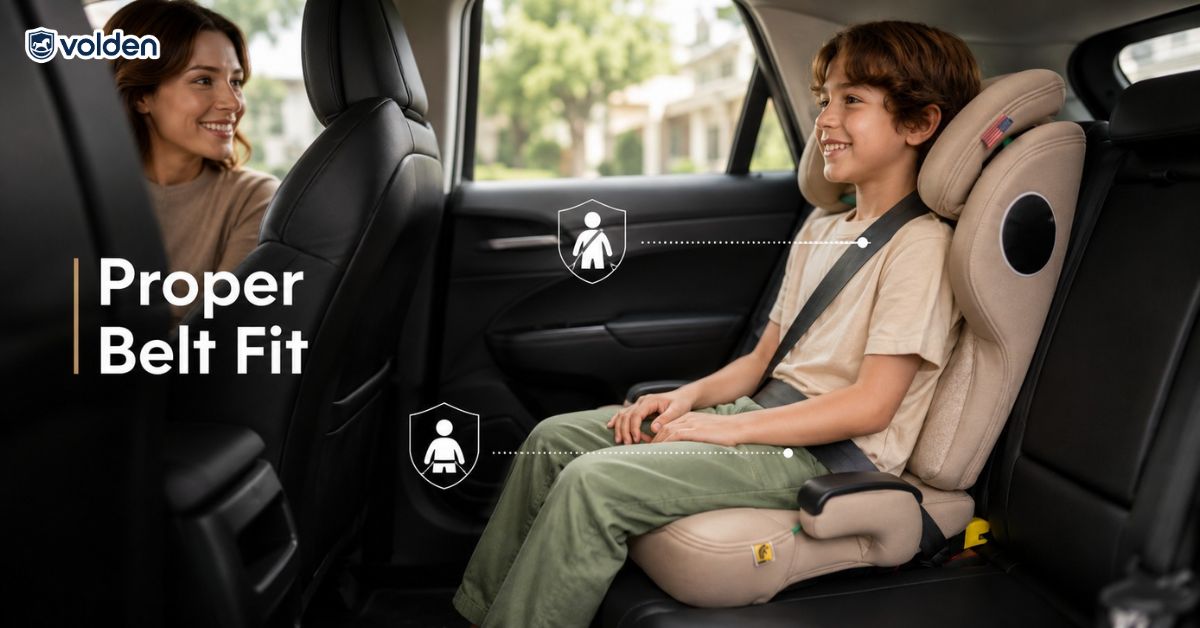
After moving to a booster, parents should check seat belt positioning every time the child rides in the vehicle.
The lap belt should:
The shoulder belt should:
The child should also keep their back against the booster or vehicle seat throughout the ride.
If the seat belt repeatedly moves out of position, check the booster installation, belt guides, vehicle seating position, and the product manual.
Once you know when to switch to booster seat, the next step is choosing the booster style that works best for your child and vehicle.
A high-back booster includes a backrest and head support.
It may be a good option for children who are newly transitioning from a 5-point harness because the backrest provides clearer boundaries for proper sitting position.
Many high-back boosters also include shoulder belt guides to help keep the vehicle seat belt correctly positioned.
A backless booster has a more compact and simple design.
It raises the child so the vehicle seat belt fits properly, while head support comes from the vehicle seat or head restraint.
A backless booster can also be easier to move between vehicles.
Whichever style you choose, the most important factor is that the vehicle’s lap-and-shoulder belt fits your child correctly.

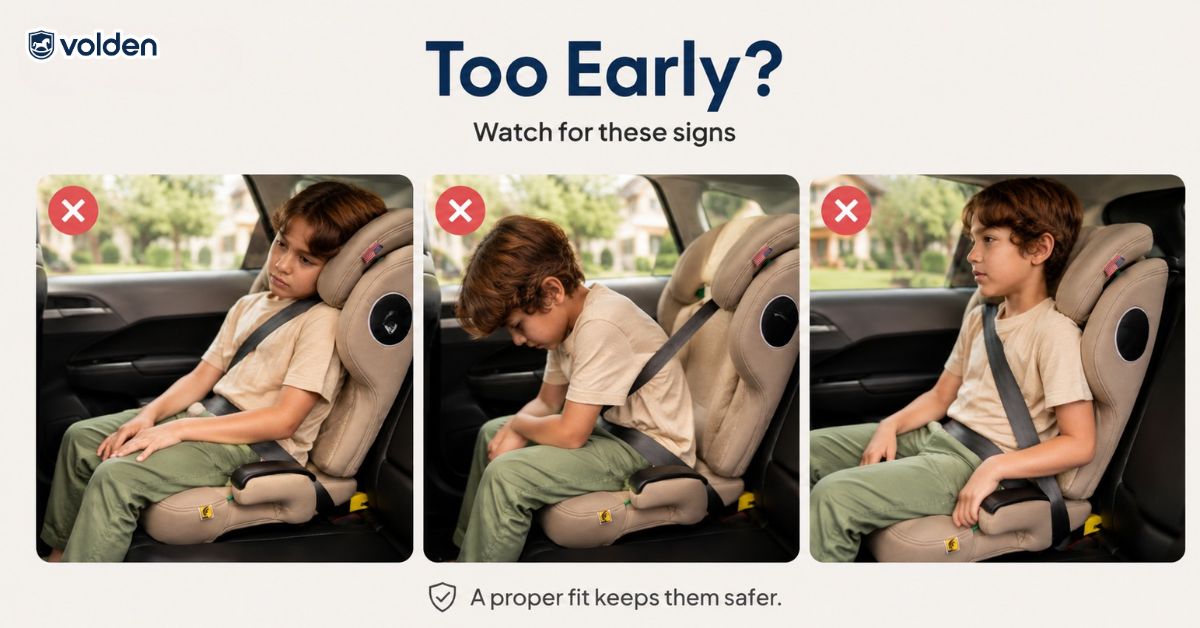
After making the transition, some parents may realize that their child is not yet mature enough to use a booster properly.
Common signs include:
These behaviors can cause the vehicle seat belt to move out of the proper position.
If these issues happen regularly and your child can still use an appropriate harnessed seat within its limits, it may be worth reassessing whether they are truly ready for the booster stage.
Knowing when to switch to booster seat means looking at more than age alone. The right time is when your child has outgrown the 5-point harness, meets the booster seat requirements, and can stay properly positioned with the vehicle seat belt throughout the ride.
Volden USA supports families through every stage of child passenger seating with solutions designed to grow with children as their travel needs change.