
news
September 10, 2026
Booster seat age is a common question for parents as children outgrow their forward-facing car seats. However, there is no single age when every child should move to a booster seat.
Instead of asking only, “What age can a child use a booster seat?”, parents should consider several factors together: age, height, weight, the limits of the current car seat, and whether the child can sit properly for the entire ride.
There is no universal booster seat age that works for every child.
In general, children around ages 4–7 should continue using a forward-facing car seat with a harness for as long as they remain within the seat manufacturer’s height and weight limits.
Many children are not ready for a booster seat until around 5–7 years old or later. The right time depends on:
For this reason, booster seat age should not be treated as a fixed milestone. If your child still fits properly in a forward-facing harness seat, there is usually no need to move to a booster yet.
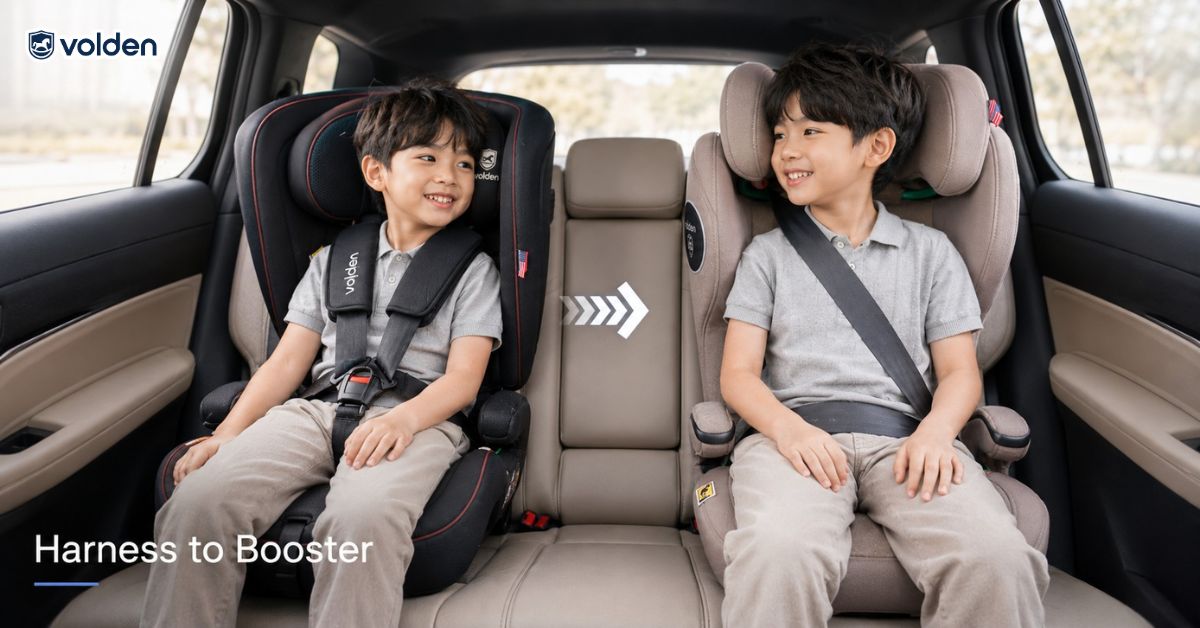
A child may be ready to move to a booster seat when all of the following conditions are met.
This should be the first thing parents check.
Review the car seat label and manual to find the maximum height and weight limits for forward-facing use with the harness.
If your child is still within those limits, there is no need to switch to a booster simply because they have reached a certain age.
Every booster seat has its own usage range.
Minimum height, weight, and age requirements may vary by model. Always check the booster seat label and instruction manual rather than relying on one general number for every child.
Unlike a harnessed car seat, a booster seat relies on the vehicle’s lap-and-shoulder seat belt to restrain the child.
That means your child must be mature enough to:
If your child frequently moves out of position or changes the seat belt placement, they may not be ready for a booster seat even if they meet the minimum age or weight requirement.

Booster seat age, height and weight all matter, but none of them should be considered alone.
| Factor | What to Check |
| Age | Is your child mature enough to use the vehicle seat belt correctly? |
| Height | Has your child outgrown the forward-facing seat and met the booster’s minimum requirements? |
| Weight | Is your child within the booster seat’s approved weight range? |
| Maturity | Can your child stay properly seated for the entire ride? |
| Car seat limits | Follow the height and weight limits listed on the seat label and in the manual. |
For example, two 6-year-olds may not be equally ready for a booster seat. One child may have outgrown the harness and consistently sit in the correct position, while another may still fit in a forward-facing seat or have difficulty staying properly seated.
Once your child reaches the appropriate booster seat age and meets the seat’s requirements, the next step is choosing between a high-back booster and a backless booster.
A high-back booster includes back and head support.
It may be a practical choice when:
The backrest can also help children understand where and how they should sit.
A backless booster has a more compact design and primarily raises the child so the vehicle seat belt fits correctly across the body.
It is generally suited to vehicle seating positions that already provide proper head and neck support.
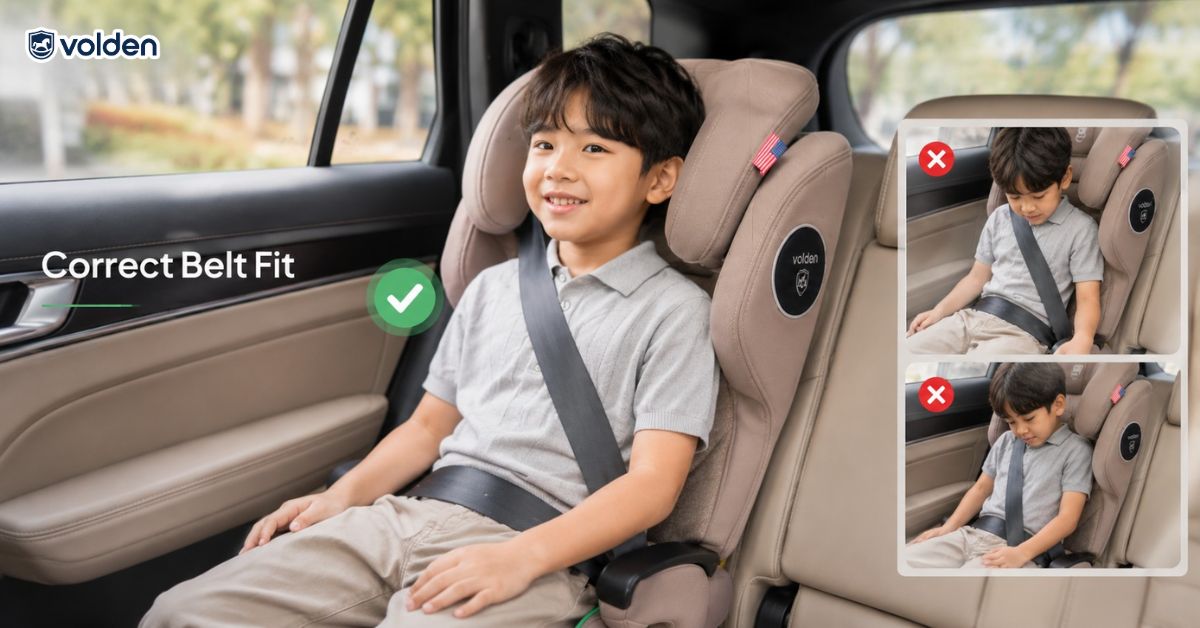
Whether you choose a high-back or backless design, the most important factor is that the vehicle seat belt fits your child correctly.
A child should not stop using a booster seat simply because they are 8 or 9 years old.
Instead, check how the vehicle seat belt fits when your child sits directly on the vehicle seat.
Proper seat belt fit means:
If the lap belt rides across the stomach, the shoulder belt touches the neck, or your child has to slide forward to bend their knees, they likely still need a booster seat.
Many children continue using a booster until they are approximately 4 feet 9 inches tall, often between ages 8 and 12. However, proper seat belt fit is more important than age alone.
One of the most common mistakes is moving a child to a booster too early simply because they seem “big enough” or no longer want to use a harness.
Parents should also avoid:
Child passenger safety laws can also vary by state, so parents should be aware of the requirements where they live in addition to following the car seat manufacturer’s instructions.
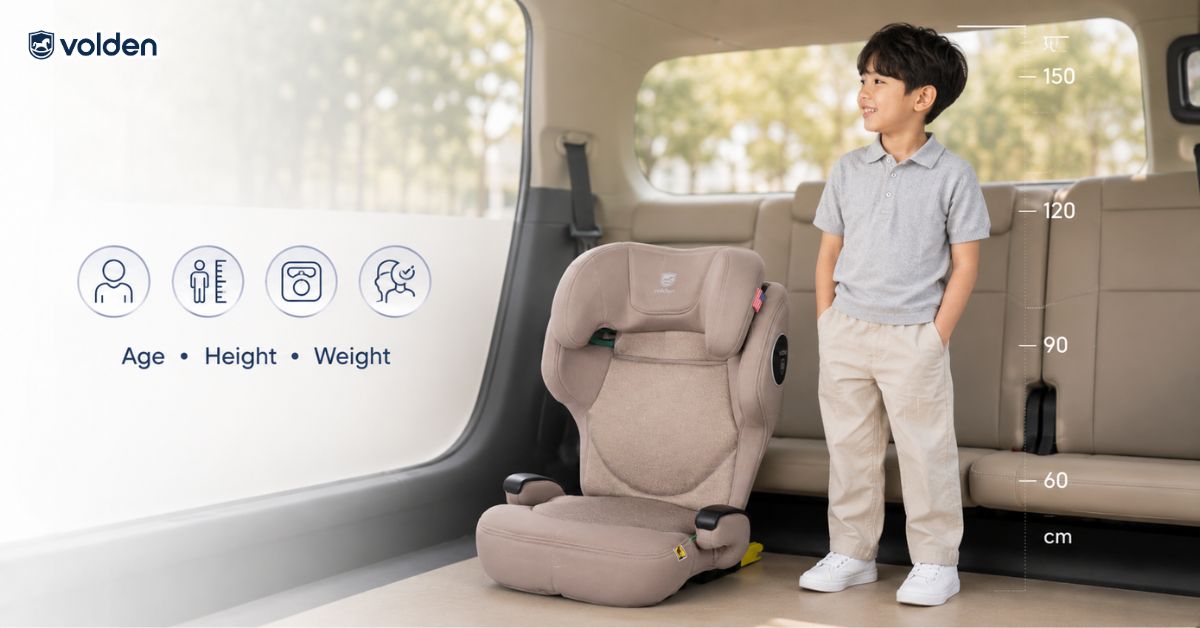
Booster seat age is not the same for every child. A child is generally ready for a booster after outgrowing the forward-facing harness, meeting the booster seat’s requirements, and being able to sit correctly for the entire ride.
At Volden USA, we believe choosing the right car seat stage helps create a safer, more appropriate fit for every stage of your child’s journey.