

news
September 10, 2026
A rear-facing car seat is one of the most important choices parents can make during a child’s early years of traveling by car. However, many parents still wonder: Should a child stay rear-facing until age 1, age 2, or even longer?
The short answer is: Keep your child rear-facing for as long as possible, until they reach the maximum rear-facing height or weight limit specified by the car seat manufacturer.
A rear-facing car seat is a child car seat installed so the child faces the back of the vehicle.
In a frontal crash, instead of the child’s head and upper body being thrown forward, the car seat shell can support the head, neck, and spine together while helping distribute crash forces across a larger area of the body.
This is especially important for infants and young children because their heads are proportionally larger than their bodies, while the bones and ligaments in their necks are still developing.
Common types of car seats that support rear-facing use include:
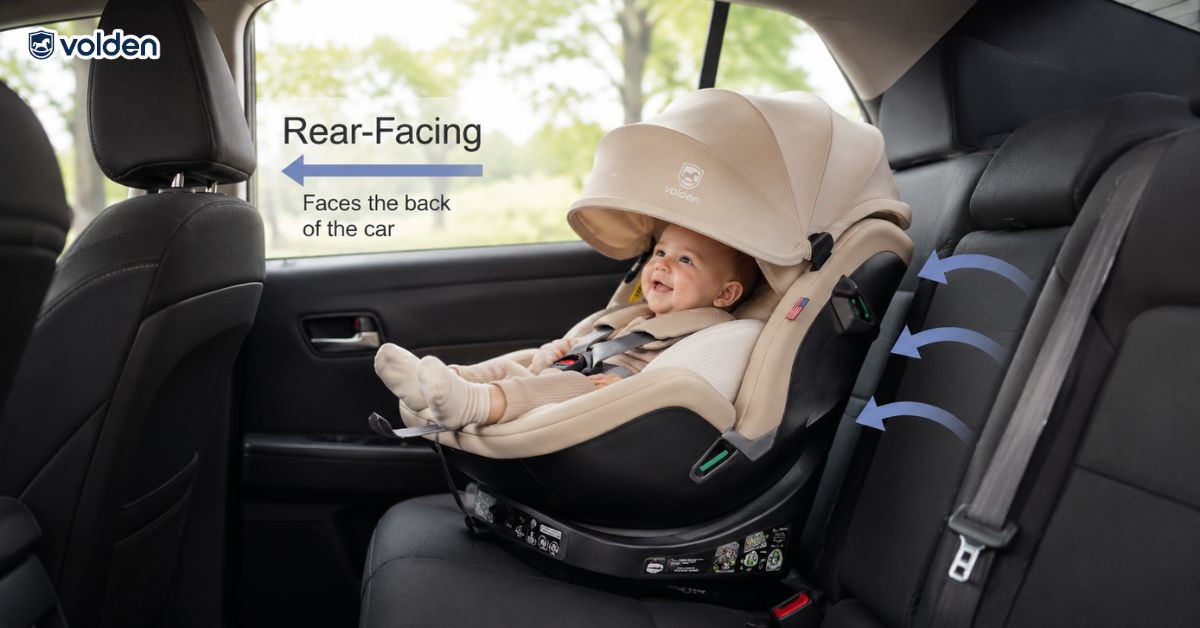
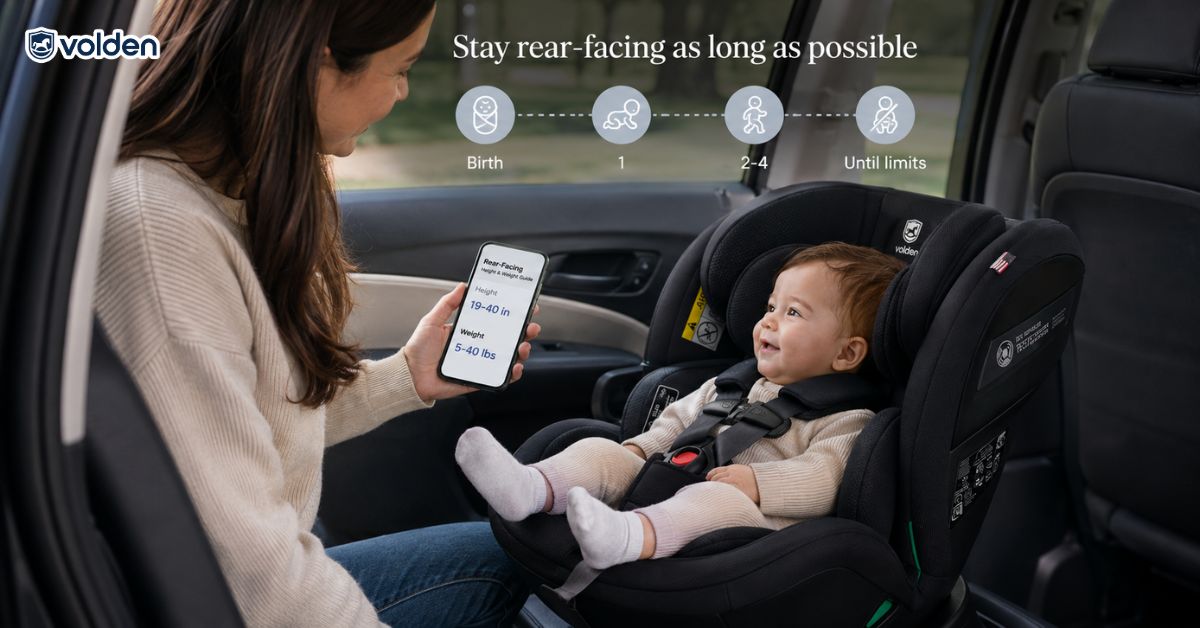
There is no single age that applies to every child. According to NHTSA, children under age 1 should always ride in a rear-facing car seat. After that, parents should continue using the rear-facing position until the child reaches the seat’s maximum rear-facing height or weight limit.
The CDC generally describes the rear-facing stage as extending from birth to around ages 2–4, depending on the child’s growth and the limits of the specific car seat.
| Stage | Recommended Car Seat Direction |
| Birth to under age 1 | Always rear-facing |
| Around ages 1–3 | Continue rear-facing as long as possible |
| Around ages 2–4 | Many children can remain rear-facing if they are still within the seat’s limits |
| Exceeds rear-facing limits | Transition to forward-facing with a harness and tether |
Important: Turning 2 does not automatically mean a child needs to switch to forward-facing.
The main advantage of rear-facing comes from how the seat supports a child’s body when a vehicle suddenly slows down or crashes.
In the rear-facing position, the car seat shell supports the child’s head, neck, and back rather than allowing the head to move forcefully forward. The AAP notes that young children’s anatomy makes their neck and spine more vulnerable to crash forces, which is why rear-facing should be continued for as long as the car seat allows.
So, when choosing a car seat, parents should not only ask:
“How old can my child be while using this seat rear-facing?”
Instead, check:
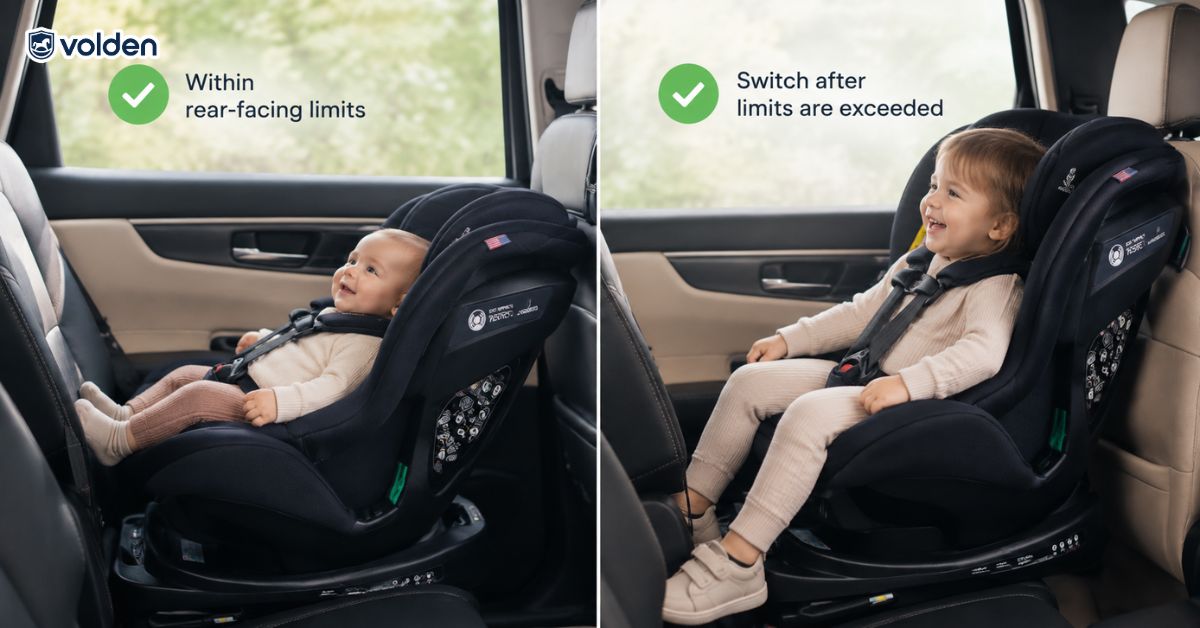
A child should switch to forward-facing only when they actually exceed the rear-facing limits of their current car seat.
Check for the following:
Once the child has outgrown the rear-facing position, they should transition to a forward-facing car seat with a harness and tether, while continuing to ride in the back seat.
Do not switch to forward-facing just because:
A child’s legs touching the vehicle seatback is very common and is not, by itself, a reason to stop rear-facing. Young children can usually find a comfortable position by bending or crossing their legs.
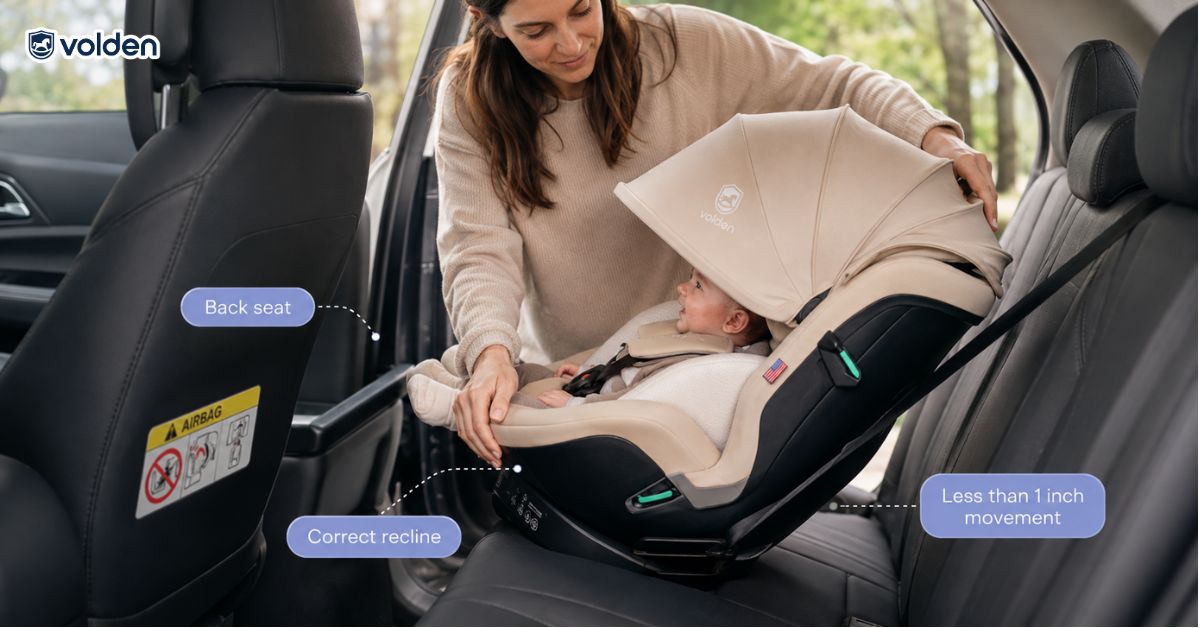
A rear-facing car seat can only perform as intended when it is installed and used according to the manufacturer’s instructions.
A rear-facing car seat should be installed in the back seat.
Most importantly, never place a rear-facing car seat in front of an active passenger air bag, because a deploying air bag can cause serious injury to a child.
The seat should be reclined at the angle recommended for your child’s age and by the car seat manufacturer. For infants, the correct recline angle is especially important for supporting proper airway positioning.
Many car seats include a built-in recline indicator to help parents confirm the correct installation angle.
After installation, check the seat at the belt path or lower-anchor connection point.
The car seat should not move more than 1 inch from side to side or front to back when tested at the belt path.
When your child is riding rear-facing:
If you can pinch excess harness webbing at the child’s shoulder, the harness may still be too loose.
Bulky coats can create extra space between your child’s body and the harness. NHTSA recommends securing the harness snugly over the child first, then placing a coat or blanket over the harness if extra warmth is needed.
Every family has different vehicle needs and different amounts of space in the back seat. That is why choosing the right rear-facing car seat should take both your child and your vehicle into account. Volden USA is ready to help parents understand product options, specifications, and how to choose a car seat that fits their needs. Contact Volden USA through our official channels for personalized support.