news
September 10, 2026
Limited back-seat space is one of the most common challenges when choosing a car seat for a sedan, hatchback, or compact SUV. A car seat that is too wide can make the back seat feel cramped for other passengers, while a rear-facing seat with a large front-to-back footprint may reduce legroom for the driver or front passenger.
In this guide, Volden USA explains the key factors parents should consider when choosing the right car seat for their child and a smaller vehicle.
Smaller vehicles usually have limited space both side to side and front to back.
A sedan or compact crossover may provide enough room for adult passengers, but once a convertible or rear-facing car seat is installed, the amount of usable space can decrease significantly.
Common challenges include:
For these reasons, choosing a car seat for compact cars requires looking at more than just one width measurement.
Not necessarily.
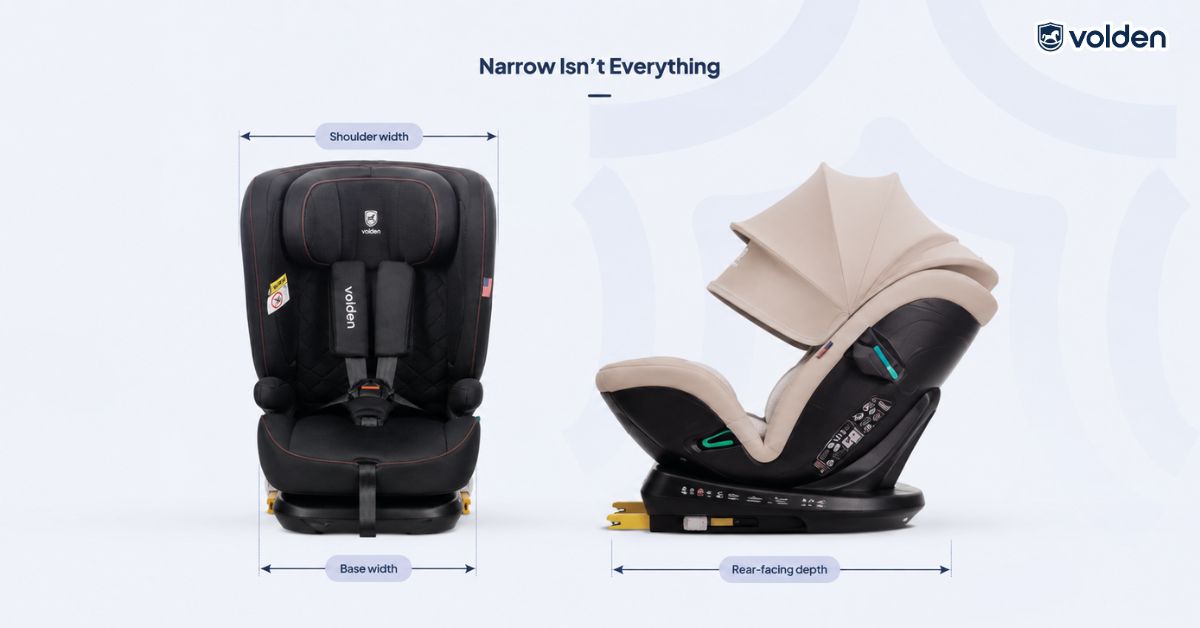
A narrow car seat can help save side-to-side space, but width is only one part of the equation.
Parents should also consider:
For example, a car seat may have a relatively narrow overall width but wide shoulder wings that still interfere with another car seat or passenger.
On the other hand, a slightly wider model with a narrow base and taller shell may use the available vehicle space more efficiently.
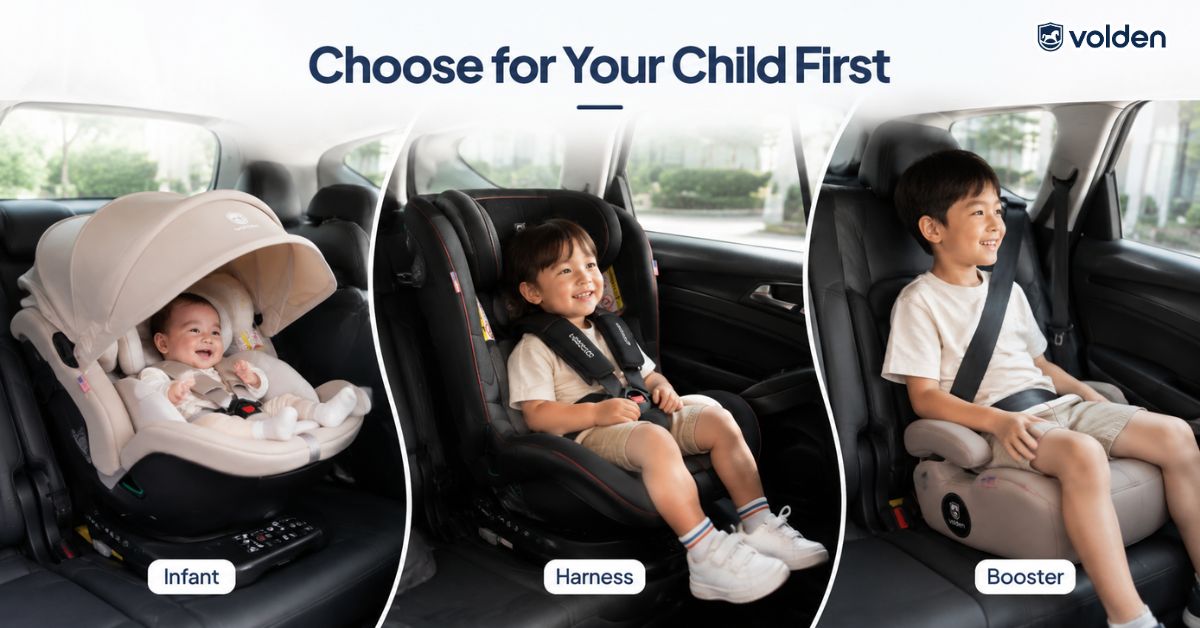
Your child should always come first.
Before choosing a car seat for small cars, consider:
Depending on the child’s stage, the appropriate restraint may include:
| Child’s Stage | Car Seat Type to Consider |
| Infants and young children | Rear-facing infant seat or convertible car seat |
| Children who have outgrown rear-facing limits | Forward-facing car seat with a harness and tether |
| Children who have outgrown the harness | Belt-positioning booster |
| Children large enough for the seat belt to fit properly | Vehicle seat belt |
A child should not be moved to the next restraint stage simply to save a few inches of space in the vehicle.
A common mistake is relying only on the vehicle’s published cabin width.
Overall interior measurements do not always show how much space is actually available for a car seat.
Parents should measure:
In smaller vehicles, even a few inches can make a noticeable difference in whether a car seat fits properly.
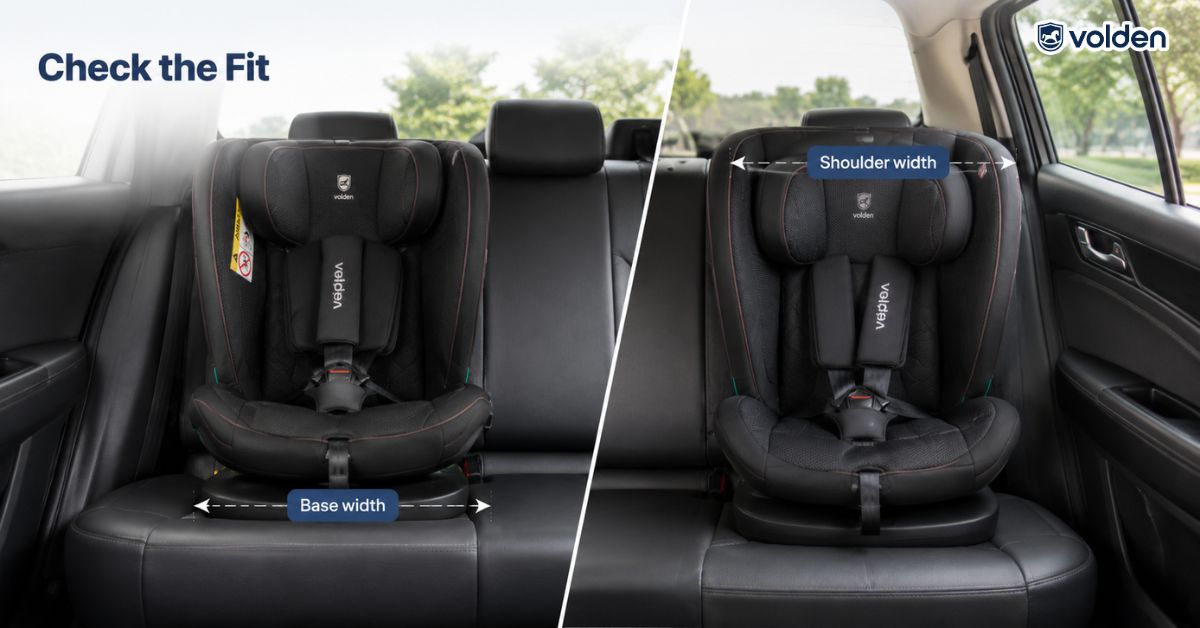
When shopping for a compact car seat, many parents focus only on the widest point of the seat.
In practice, base width can be just as important.
The base is the portion of the car seat that sits directly on the vehicle seat. A wider base leaves less room for another passenger or adjacent child restraint.
A compact base can be especially helpful when:
A narrow base does not necessarily mean the entire car seat is narrow.
Some car seats have wide shoulder wings or headrests designed to surround and support the child. If these areas extend too far outward, they may interfere with:
When comparing the best car seat for small cars, check the upper dimensions of the car seat as well as the base.
Rear-facing mode often requires the most front-to-back space.
This is especially important in:
A car seat with a more compact rear-facing footprint may allow the driver or front passenger to maintain a more comfortable seating position.
However, parents should never adjust the recline angle outside the manufacturer’s approved range simply to make the seat take up less room.
Not every seating position has lower anchors.
Some vehicles provide dedicated lower anchors for the two outboard rear seating positions but not for the center seat.
Before purchasing a car seat, parents should review the Child Restraint section of the vehicle owner’s manual to determine:
A car seat may look perfect on paper and still not fit properly in the actual vehicle.
After installation, check the seat at the belt path.
The car seat should not move more than about 1 inch side to side or front to back when tested at the belt path.
If the car seat:
the setup should be reevaluated.
Sedans usually have lower rooflines and less front-to-back space than many SUVs.
When choosing a car seat for a sedan, parents should prioritize:
Compact SUVs often provide more headroom than sedans, but their second rows are not always significantly wider.
Parents should still consider:
A compact SUV may provide more vertical space, but that does not mean every car seat will fit well.
Before making a purchase, parents can use this quick checklist:
When looking for a car seat for small cars, parents can explore solutions from Volden USA and choose a model based on the child’s needs, the vehicle’s available space, and real-world installation compatibility.