
news
September 10, 2026
Not every family drives a large SUV or minivan with a spacious second row. In a sedan, hatchback, or compact SUV, an oversized child car seat can make it difficult to accommodate another passenger or install multiple car seats at the same time. That is why slim car seats are becoming increasingly popular among parents in the United States.
This guide explains what a slim car seat is, when it may be a practical choice, and how to find the right option for a vehicle with limited interior space.
A slim car seat is a child car seat designed with a narrower width or more compact overall profile to help maximize space in the back seat.
Unlike officially regulated safety terms, words such as “slim,” “narrow,” and “compact” primarily describe a product’s design. There is no single standardized width that determines whether a car seat qualifies as a slim car seat.
This means parents should not rely only on the word “slim” in a product name. Two car seats with the same listed width may take up very different amounts of space once installed in a vehicle because of factors such as:
For that reason, a good narrow car seat is not necessarily the smallest car seat available. It is one that is compact enough to install correctly in your vehicle while still being appropriate for your child’s stage of development.
A compact design can be useful in several real-world situations.
The second row in smaller vehicles typically has less usable width than a three-row SUV or minivan. A child car seat with wide shoulder wings or protruding cup holders can take up a significant amount of space that would otherwise be available to another passenger.
A well-designed car seat for small cars can help make better use of the back seat without forcing a family to move to a larger vehicle simply because of car seat space.
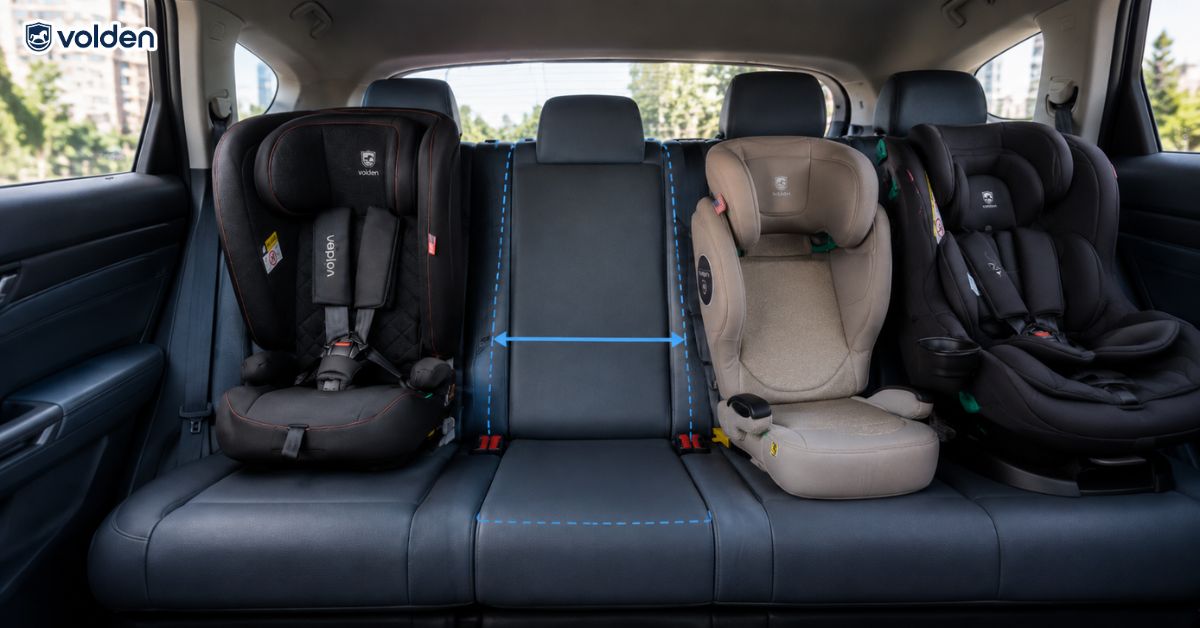
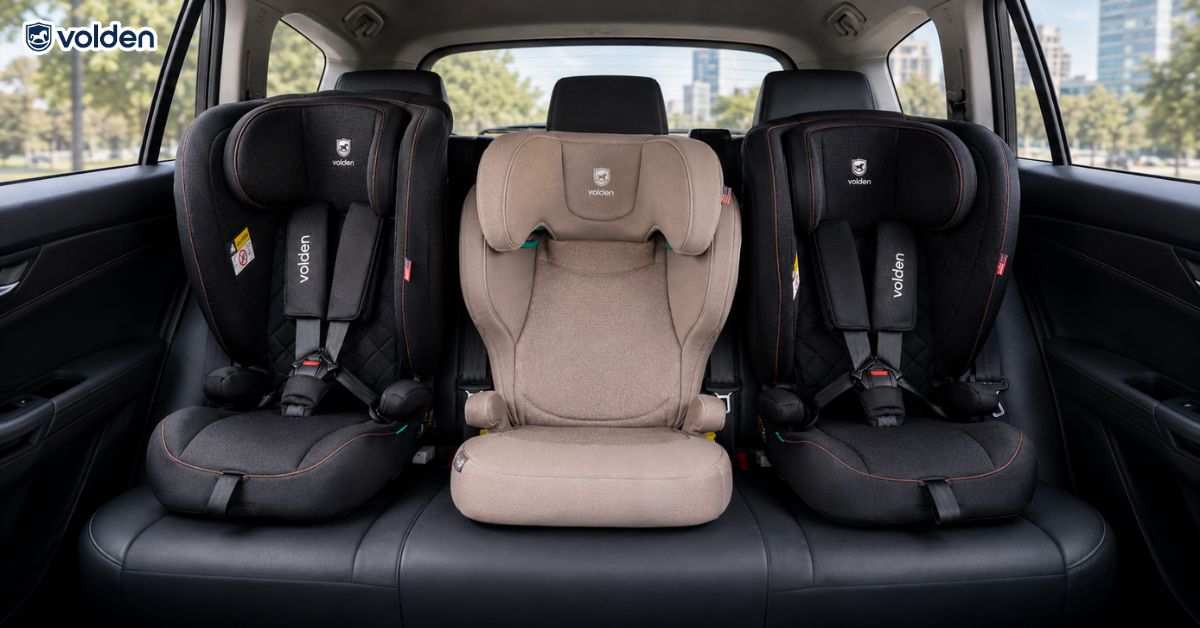
One of the most common reasons parents search for slim car seats is to create a three-across setup, meaning three child restraints or booster seats installed on the same row.
In this situation, just a few inches of difference between car seat models can determine whether the arrangement is practical.
However, three “slim” car seats do not automatically guarantee a successful three-across installation. The shape of the vehicle seat, buckle locations, lower anchor positions, and the contours of each car seat all affect the final fit.
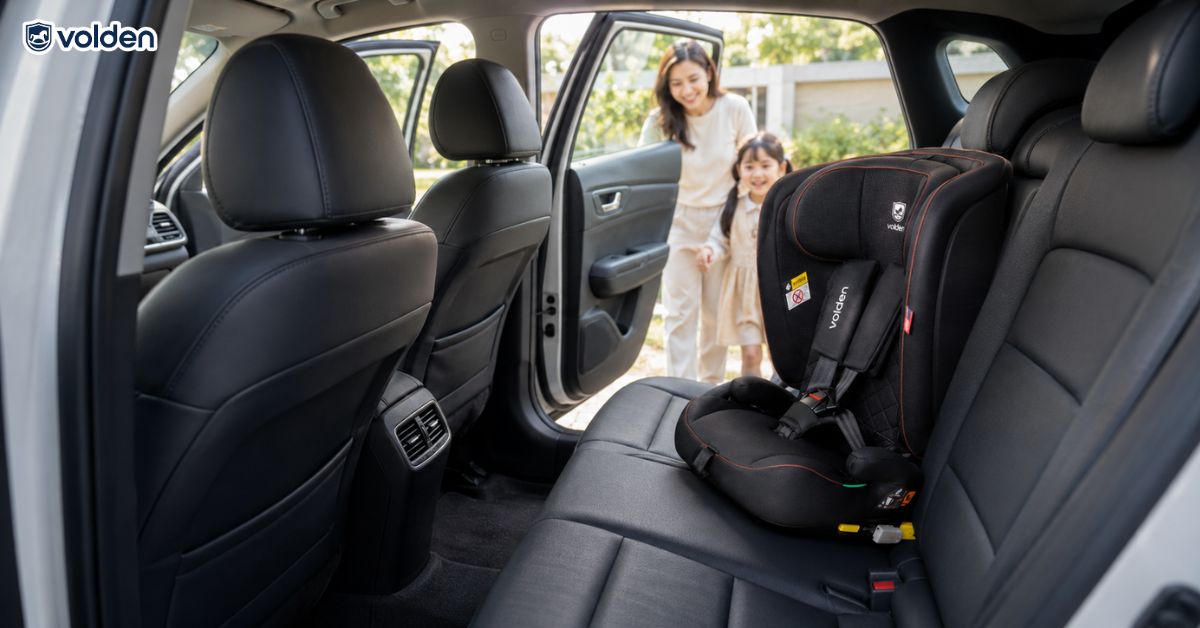
Even families with only one car seat may benefit from a slim design if an adult frequently rides in the back seat.
A narrower car seat can help reduce crowding and make it easier for another passenger to access and buckle the vehicle seat belt.
If your family regularly moves a car seat between vehicles, a compact car seat may be easier to carry and test in different seating positions.
However, compatibility should still be checked in each vehicle rather than assuming that a smaller car seat will fit every car.
They can be. The external size of a car seat is not the only factor that determines its level of protection.
In the United States, parents should check the federal safety label and choose a car seat that is appropriate for both the child and the vehicle. The American Academy of Pediatrics also recommends reviewing important information such as the federal safety label, height and weight limits, manufacturer information, instructions, and the registration card.
More important than the word “slim” is whether the car seat:
For that reason, parents should not move a child into a less appropriate seating position simply to gain a narrower car seat.
This should always be the first step.
A very narrow car seat is not the right choice if your child has already outgrown it. Before comparing car seat dimensions, determine what type of restraint your child currently needs.
| Child’s Stage | Car Seat Type to Consider |
| Infants and young children | Rear-facing infant seat, convertible seat, or all-in-one seat |
| Children who have outgrown rear-facing limits | Forward-facing seat with a harness and tether |
| Children who have outgrown the harness | Belt-positioning booster |
| Children large enough for the vehicle seat belt to fit properly | Vehicle seat belt |
When comparing slim car seats, look at more than the overall width.
Pay particular attention to:
Base width: This is the part that sits directly on the vehicle seat and often has a major impact on whether a three-across setup is possible.
Shoulder width: A car seat may have a narrow base but wide side-impact wings that interfere with the car seat next to it.
Rear-facing depth: This is especially important in compact cars or vehicles with limited front-to-back space in the second row.
Cup holders and armrests: Features that extend outward can make an otherwise narrow car seat take up more usable space.
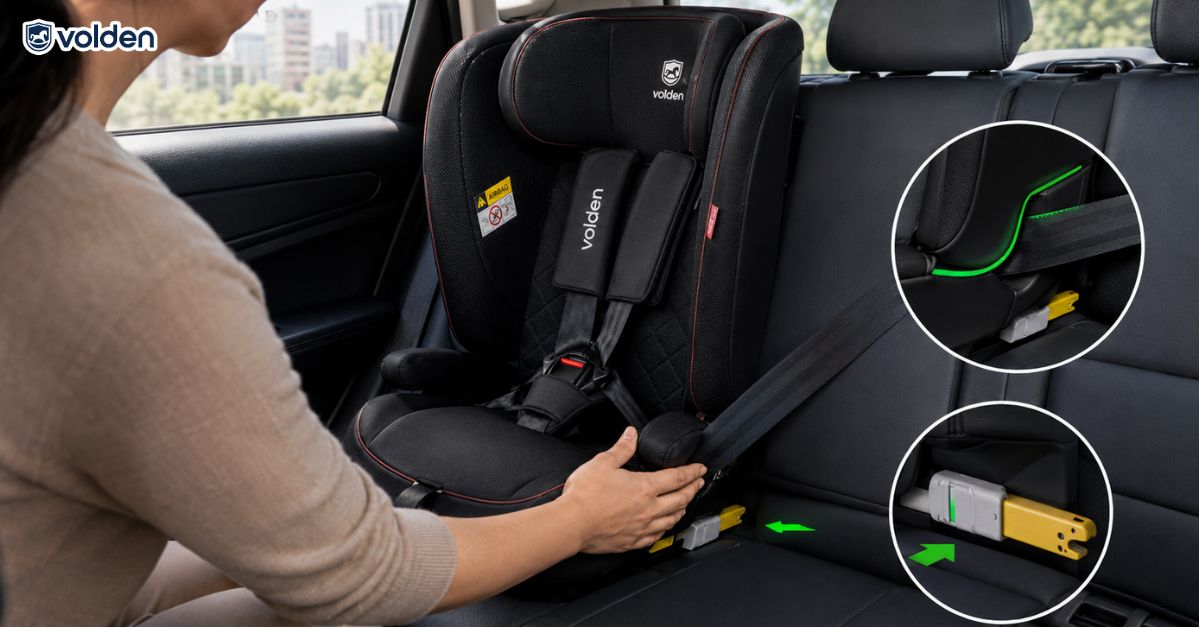
Do not simply measure the total width of the cabin and divide it by three to determine whether a three-across setup will work.
Vehicle back seats often include:
Keep in mind that although the center rear seat can be a good location for a car seat, not every vehicle allows a secure installation there. Many vehicles also do not have dedicated lower anchors in the center position.
The best seating position is the one where the car seat can be installed securely and correctly according to both the car seat and vehicle instructions.
A common mistake when planning a three-across arrangement is assuming that all three seating positions can use LATCH or lower anchors.
In reality, anchor configurations vary by vehicle. NHTSA notes that vehicles have lower anchors in at least two rear seating positions, and parents should check the vehicle owner’s manual to identify the exact anchor locations and proper installation methods.
If the car seat is installed with the vehicle seat belt, use the correct belt path and locking method specified by the vehicle and car seat manufacturers.
Do not create your own center LATCH position by using one lower anchor from each adjacent seating position unless the vehicle owner’s manual specifically allows it.
A slim car seat is only a good fit if it can be installed correctly.
After installation, the car seat should not move more than 1 inch side to side or front to back when tested at the belt path.
If the seat cannot be tightened securely because of the vehicle seat shape, or if another car seat pushes it out of position, try a different seating position or configuration.

When comparing products, parents can use the following checklist:
| Criteria | Why It Matters |
| Fits the child’s height and weight | Helps determine whether the seat is appropriate for the child’s current stage |
| Base width | Directly affects usable back-seat space |
| Shoulder width | Important when installing multiple car seats next to one another |
| Rear-facing depth | Should be checked carefully in smaller vehicles with limited front-to-back space |
| Installation method | Must be compatible with the selected seating position |
| Tether and belt path | Important for correct installation |
| Ability to test the seat in the actual vehicle | Measurements on paper do not always reflect real-world compatibility |
Width matters, but it is not the whole story.
A slightly wider car seat with a narrow base and a higher shell may fit next to another child restraint more effectively than a model that looks narrower based only on its published dimensions.
A three-across setup depends on the combination of the car seat + vehicle + seating position.
No single car seat can be guaranteed to fit three across in every vehicle.
Parents should not move a child to the next restraint stage simply because a booster seat is narrower.
A child should continue using a forward-facing harness until they reach the appropriate limits for that seat and are ready to transition to a booster.
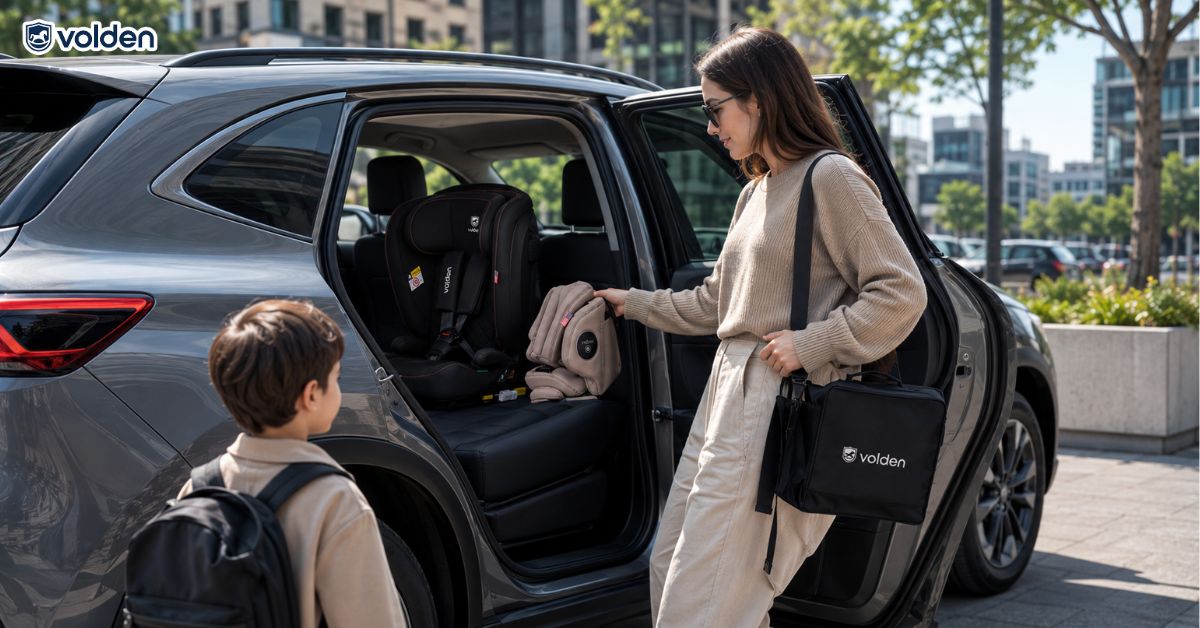
The center seating position does not always have dedicated lower anchors.
Check the vehicle owner’s manual rather than assuming lower anchors are available in the center.
For a rear-facing car seat, width is not always the biggest challenge. Front-to-back space between the rear seat and the front seats can be just as important.
That is why parents looking for a compact car seat should consider both width and depth.
Volden is headquartered in the United States and develops child safety products as one of the core areas within its broader brand ecosystem, with an emphasis on engineering, innovation, and long-term product value.
When looking for a car seat for a smaller vehicle, parents can explore solutions from Volden USA and choose a product based on the child’s age, size, and the car seat’s real-world compatibility with the family vehicle.