news
September 10, 2026
Once a child has outgrown the limits of a harnessed car seat but is still too small for the vehicle seat belt to fit properly, a booster seat is often the next step. However, many parents face another question: should they choose a high back booster seat or a backless booster?
The right choice should not be based on age alone. Parents should also consider the child’s size, ability to stay properly seated, and the design of the vehicle’s back seat.
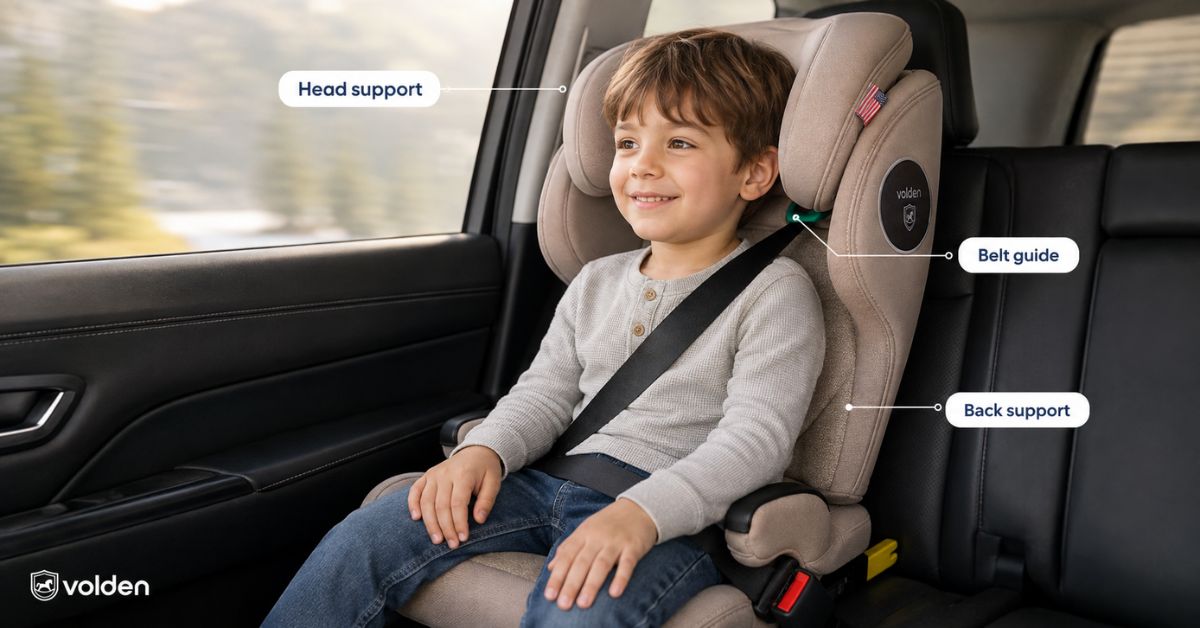
A high back booster seat is a booster with a backrest and headrest behind the child. Unlike a car seat with an integrated harness, a booster typically uses the vehicle’s lap-and-shoulder belt to restrain the child.
The backrest helps support the child’s seating position and often includes a shoulder belt guide to help keep the belt properly positioned.
When used correctly, the seat belt should:
A high back booster seat can be especially useful for children who are newly transitioning from a harnessed car seat and still benefit from additional support to maintain a consistent seating position.
A backless booster does not have a tall backrest behind the child. Its main purpose is to raise the child high enough so the vehicle seat belt fits correctly.
The most obvious advantages are its smaller size, lighter weight, and portability between vehicles. This makes a backless booster a popular choice for families that need a secondary booster or frequently use taxis, rideshares, or a relative’s vehicle.
However, a backless booster does not provide its own head or back support. The vehicle seat must have a head restraint or seatback that is high enough to properly support the child’s head and neck.
| Feature | High-Back Booster | Backless Booster |
| Backrest | Yes | No |
| Head support | Built-in headrest | Depends on vehicle seat |
| Shoulder belt positioning | Often includes a belt guide | Depends on design |
| Posture support | Better for children who lean or sleep | More limited |
| Size | Larger | More compact |
| Portability | Less convenient | Easier to carry |
| Suitable for vehicles without adequate head support | May be, depending on model | No |
| Moving between vehicles | Requires more space | More convenient |
Neither option is automatically the best choice for every family. The booster must fit the child, the vehicle, and the way the family actually uses it.
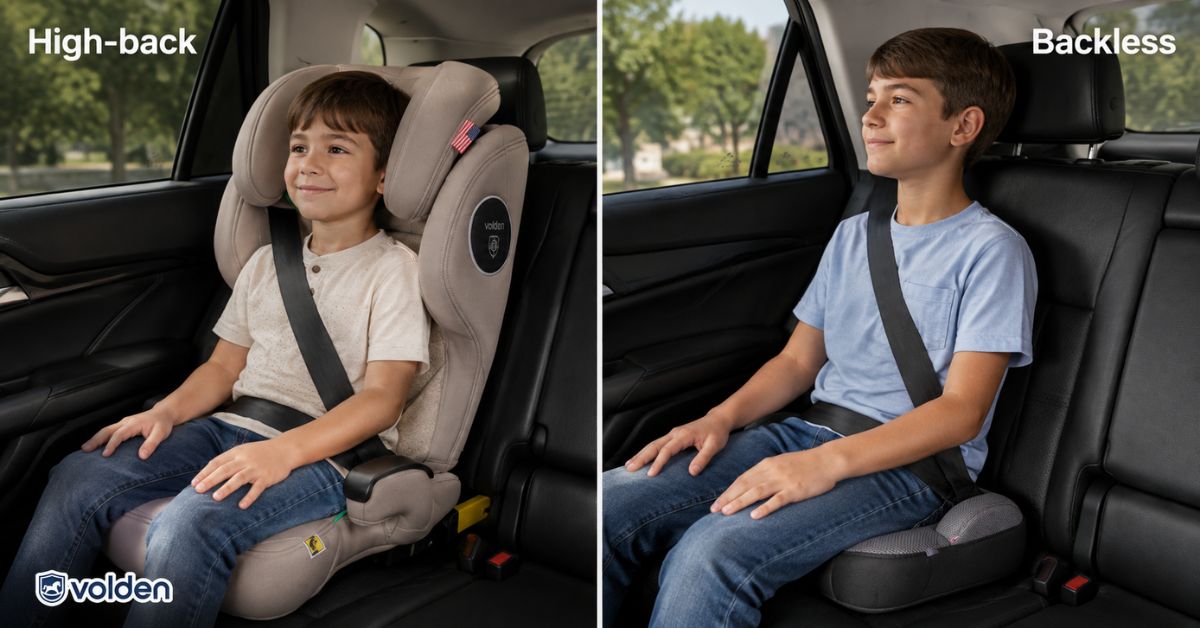
There are several situations where a high back booster seat may be the better option.
A child may meet the size requirements for a booster but still not be behaviorally ready to use one.
When riding in a booster, a child must be able to sit with their back against the seat, avoid leaning forward, keep the shoulder belt in place, and maintain the correct position throughout the ride.
The backrest and headrest of a high-back booster may help children maintain a more stable seating position as they adjust to booster use.
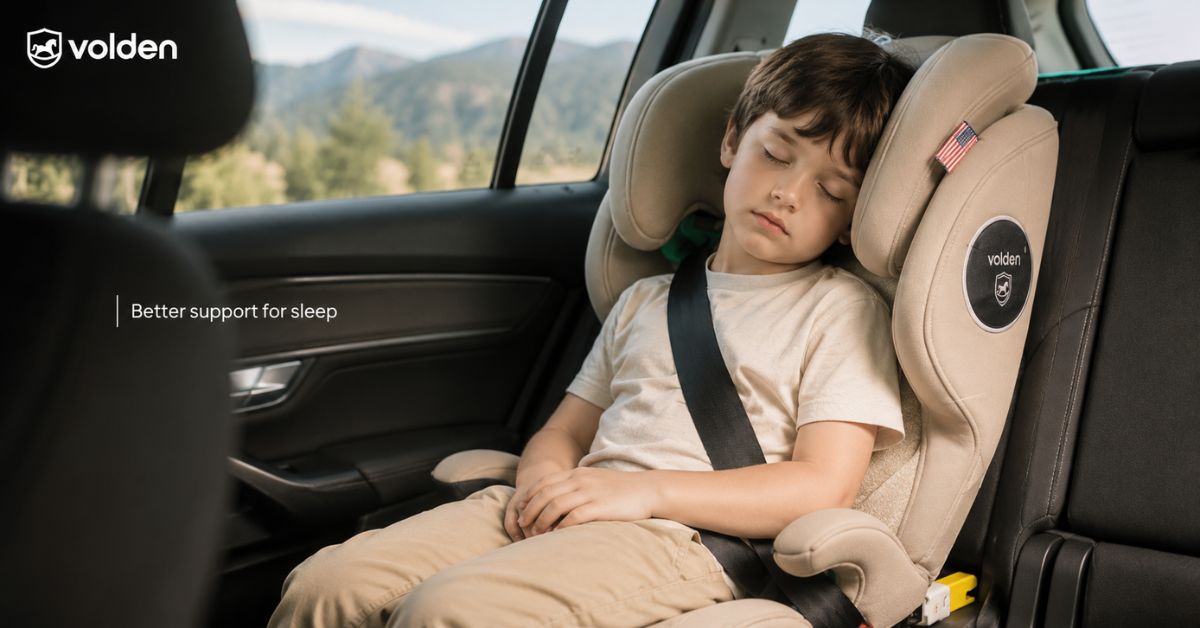
When children fall asleep, they may lean their head or upper body to one side. If the body moves significantly, the seat belt can also move out of position.
A booster with a backrest and head support can help provide better positioning during longer trips.
A backless booster should only be used in a seating position that provides adequate head support from the vehicle seat or head restraint.
If the rear seatback is low or does not properly support the child’s head, a high back booster seat may be a more appropriate choice.
Many high-back boosters include a shoulder belt guide built into the headrest.
When adjusted to the correct height, the guide can help position the shoulder belt across the center of the child’s shoulder instead of allowing it to ride too close to the neck.
A backless booster may work well for an older child who can consistently maintain the correct seating position and whose vehicle provides adequate head support.
This option can be especially convenient for families that:
However, portability should not be the only reason to switch from a high-back booster to a backless model.
The child must still meet the product’s height and weight requirements, and the vehicle seat belt must fit correctly.
Instead of asking, “At what age can my child use a backless booster?” a more useful question is: Does the seat belt fit my child correctly?
After placing your child in the booster, check:
If the lap belt crosses the stomach or the shoulder belt sits too close to the neck, the booster is not providing proper seat belt positioning.
Never allow a child to place the shoulder belt under their arm or behind their back to make it feel more comfortable.
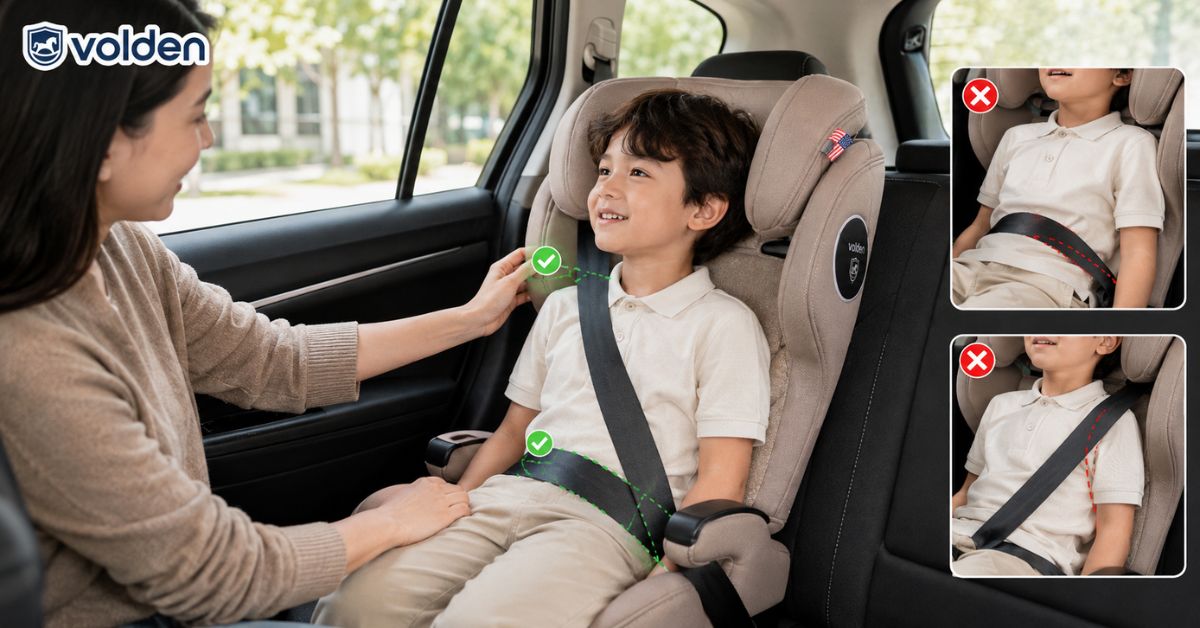
Whether you choose a high back booster seat or a backless booster, proper use is essential.
Parents should avoid:
A simple booster that fits the child and is used correctly is more useful than a feature-packed product that does not fit the child or vehicle properly.
When choosing a booster from Volden US, parents should start with their child’s height, weight, maturity, and the design of the vehicle they use most often rather than choosing based on age alone.
That is one of the simplest ways to find the right solution for the transition from a harnessed car seat to the vehicle seat belt.