
news
September 10, 2026
Toddler car seat selection should not be based on age alone. A child’s height, weight, development and the limits of each seat all matter. Volden explains how to choose between rear-facing, forward-facing and booster seats, plus the key signs that tell parents when it is time to move to the next stage.
When parents shop for a toddler car seat, age is usually the first number they look at. However, age only provides a general reference. Two children of the same age may have very different heights and weights. That means they may need different seat configurations.
The better approach is to consider four factors together:
Parents should keep their child in the current seating stage until that stage has been outgrown. There is usually no reason to move forward early simply because the child reaches a certain birthday.
Here is a simple guide:
| Child stage | Recommended seat type | What to check |
| Birth to around age 2+ | Rear-facing car seat | Height, weight and head clearance |
| Toddler to preschool | Rear-facing as long as the seat allows | Rear-facing limits |
| After rear-facing is outgrown | Forward-facing car seat | Harness height and weight limits |
| After harness is outgrown | Booster seat | Vehicle seat belt fit |
| Older child | Vehicle seat belt | Proper shoulder and lap belt position |
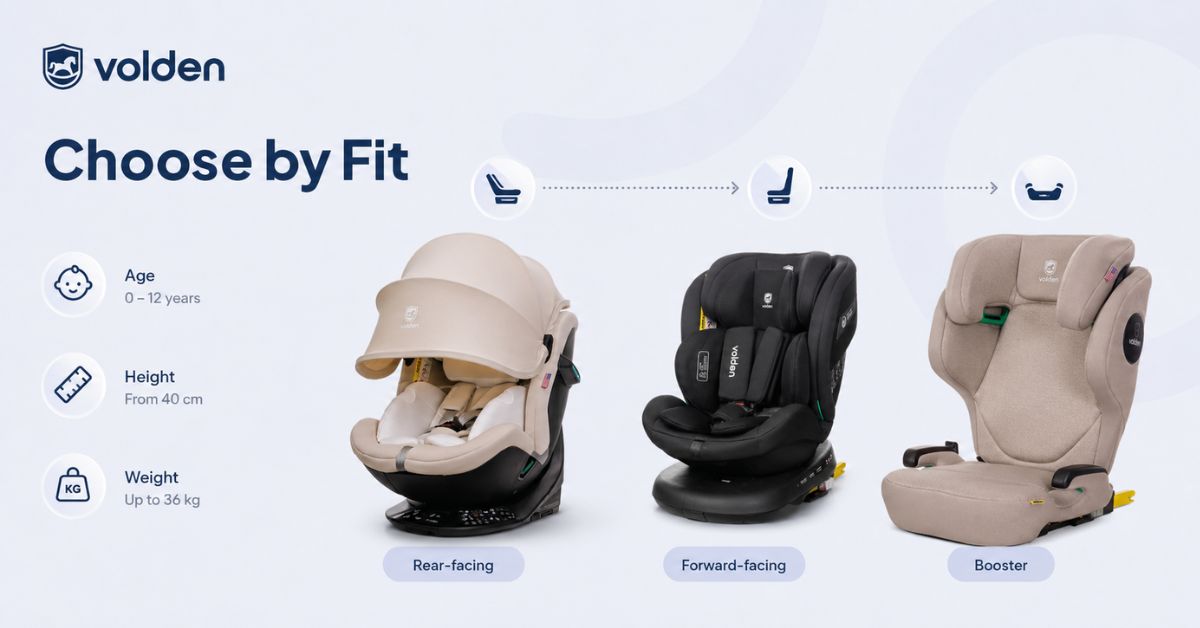
For most young children, rear-facing is the first stage of car seat use.
Parents sometimes wonder whether a toddler should turn forward once they reach age 2. However, a birthday does not automatically mean the child must change direction.
A toddler car seat should generally remain rear-facing while the child still fits within the manufacturer’s rear-facing limits.
Parents should check:
If all of these requirements are still met, the child may continue using the rear-facing car seat.
One common concern is legroom.
Parents may notice their toddler bending, crossing or resting their legs against the vehicle seat. This does not automatically mean the seat has become too small.
The more important measurements are the limits specified for the toddler car seat itself.
Children also grow at different speeds. A smaller toddler may remain rear-facing longer than a taller child using the same seat.
Therefore, parents should periodically measure both height and weight rather than waiting for a birthday.
A practical schedule is to check the child’s fit every few months.
Parents should also review the seat after a noticeable growth spurt. Toddlers can gain several centimeters in height before parents realize that the harness or headrest needs adjusting.
The correct harness position also matters.
For rear-facing use, the harness should follow the position specified by the manufacturer and fit closely against the child’s body.
Avoid adding thick cushions, padding or accessories that were not designed for the seat.
A correctly fitted toddler car seat should hold the child securely without relying on bulky clothing or extra padding.

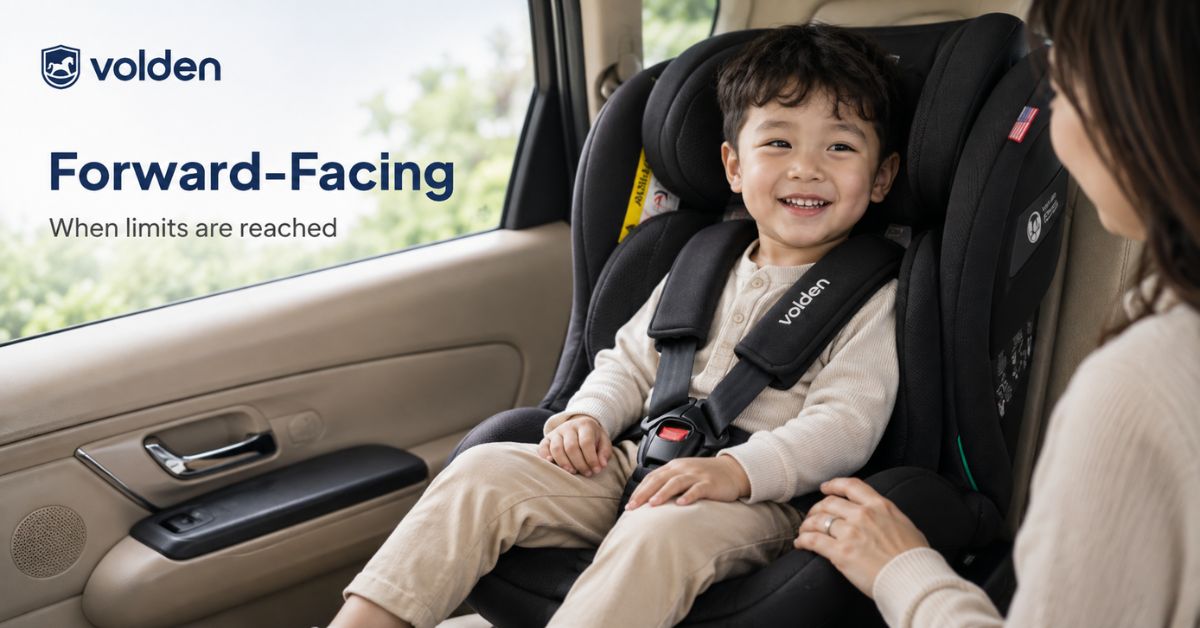
A child can move into a forward-facing car seat after the rear-facing mode has genuinely been outgrown. Parents should not make the switch only because forward-facing appears more convenient. Before changing direction, check the rear-facing limits one final time.
If the child has reached the maximum permitted height, weight or another fit limit, parents can begin using the next approved configuration. A forward-facing toddler car seat normally uses an internal harness. The harness should fit snugly while allowing the child to sit naturally against the seat.
Parents should check several areas after the transition:
A child should usually stay in a harnessed seat until the forward-facing limits are reached.
This means parents should not rush from a toddler car seat into a booster.
A booster works differently from a harnessed seat. Instead of holding the child with an internal harness, it positions the vehicle’s seat belt correctly across the body.
That requires more than physical size.
The child must also be able to sit correctly throughout the journey.
A child who frequently leans forward, moves the shoulder belt or unbuckles may not yet be ready for a booster, even if the minimum size requirement has been reached.
For this reason, booster seat readiness involves both body size and maturity.
The transition sequence should normally look like this:
Rear-facing → Forward-facing harness → Booster seat → Vehicle seat belt.
Parents should avoid skipping stages simply to reduce the number of car seats they need to purchase.
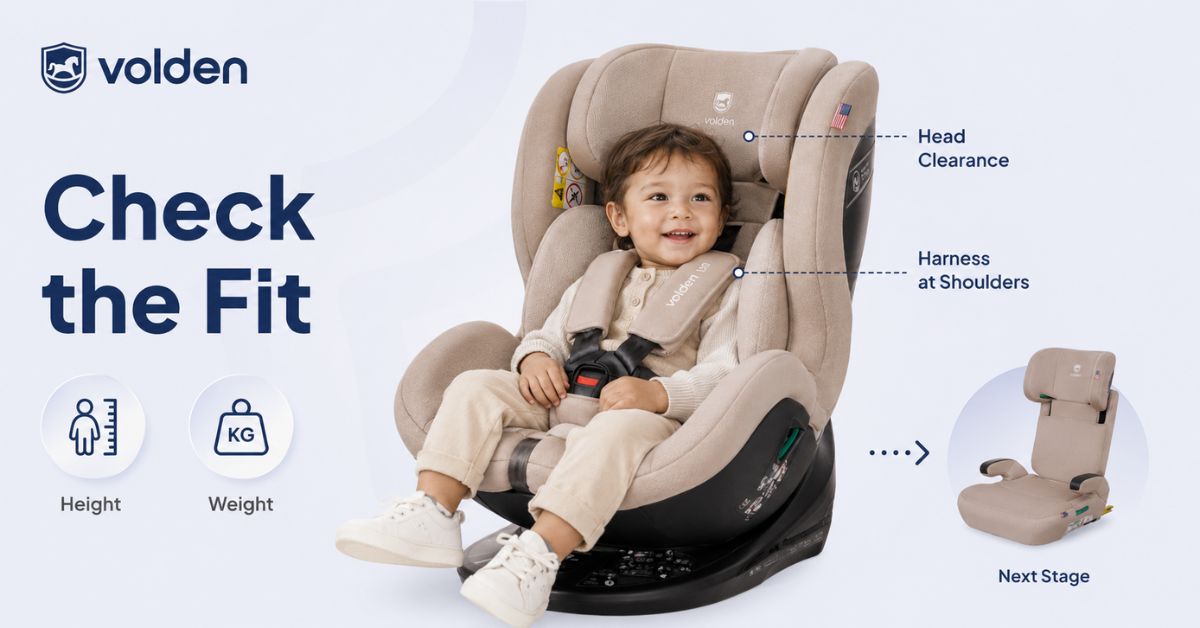
Height and weight are two of the most important measurements when evaluating a toddler car seat.
However, they affect fit differently.
Weight mainly determines whether the child remains within the structural limits of a particular seating mode.
Height affects several areas, including head position, shoulder position and harness placement.
For example, a child may still be below the maximum weight but become too tall for a certain configuration.
In that situation, parents should follow the height limit rather than waiting for the weight limit.
The reverse can also happen.
A shorter but heavier child may reach the car seat weight limit first.
Therefore, parents should treat both limits as maximum boundaries. Reaching either limit may mean the current mode has been outgrown.
A toddler car seat by weight should never be selected without checking height compatibility as well.
Parents can use this quick routine:
Keep the measurements somewhere easy to update.
Doing this every few months makes it easier to notice when the child is approaching a limit.
It also gives parents time to research the next child car seat instead of making a rushed purchase after the current seat has already been outgrown.
Parents should not wait until their child looks visibly uncomfortable before checking whether a seat has been outgrown.
Some signs are easy to miss.
A toddler car seat may need a configuration change when:
The child becoming more active does not automatically mean a different seat is needed.
Likewise, a child complaining about bent legs does not necessarily mean rear-facing has been outgrown.
Use measurable fit criteria instead of appearance alone.
Another important point is that the entire car seat may not need replacing.
Some models allow parents to change from rear-facing to forward-facing. Later, certain models can transition again into booster use.
Parents should therefore check whether the existing seat supports the child’s next stage before purchasing another one.
Even the right seat can become less effective when used incorrectly.
Some of the most common mistakes are surprisingly simple.
Parents should avoid:
Parents should also check the seat after moving it between vehicles.
A toddler car seat that fits well in one vehicle may require different installation adjustments in another.
Vehicle seat shape, anchor locations and available space can all affect installation.
The best seat is therefore not simply the most expensive or most feature-rich option.
It is the model that fits the child, fits the vehicle and can be used correctly every day.
There is no single age milestone that applies to every child when selecting a car seat for a toddler; parents need to monitor height, weight, and the seat’s specific usage limits at each stage. Volden partners with parents to help choose the right seat—whether rear-facing, forward-facing, or a booster—ensuring every journey is safe and comfortable for the child.