

news
September 10, 2026
An all in one car seat and a convertible car seat can both support your child through multiple stages, but they are not the same. The biggest difference is simple: an all-in-one seat usually adds a booster mode, while a convertible seat mainly covers rear-facing and forward-facing use. Volden explains which option may fit your family better.
An all in one car seat is designed to cover several stages of car-seat use in one product.
Depending on the model, it may include:
Its main advantage is long-term use. Parents may be able to keep the same seat as their child grows instead of purchasing a different seat for every stage.
An all in one car seat can be a practical choice for families that want:
However, all-in-one models can be larger or heavier. Parents should always check the exact height, weight, and vehicle-fit requirements.
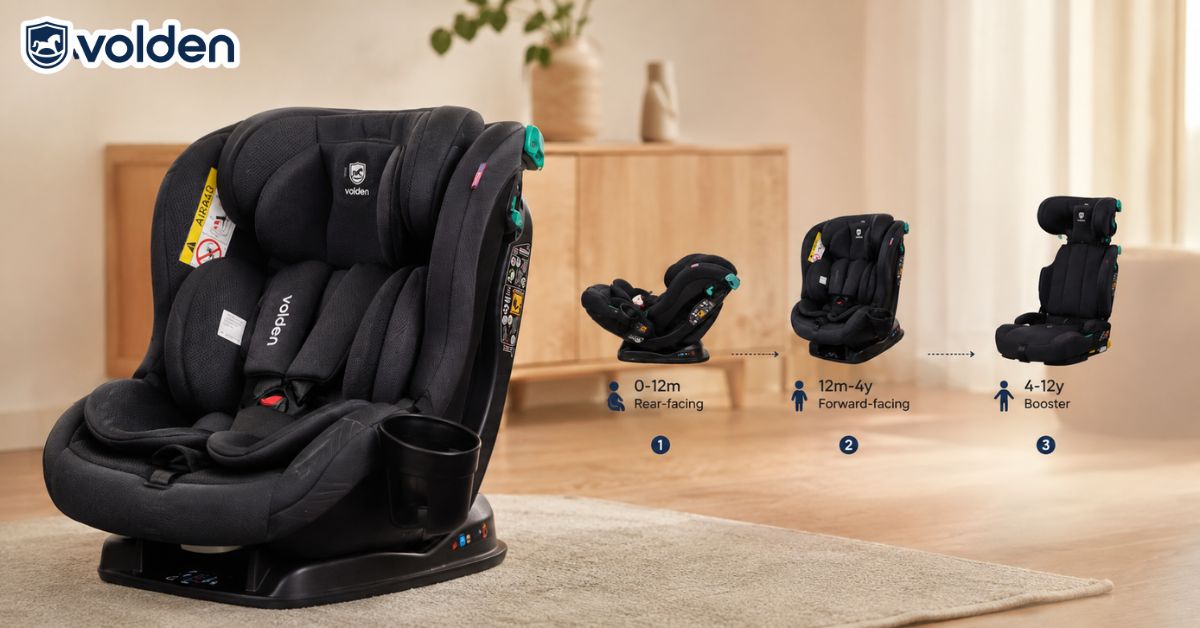
A convertible car seat usually covers two main stages:
Once a child outgrows the forward-facing harness, parents usually move to a separate booster seat.
Convertible seats are popular because they focus on the stages when children still need an internal harness.
They may be a better choice for families that:
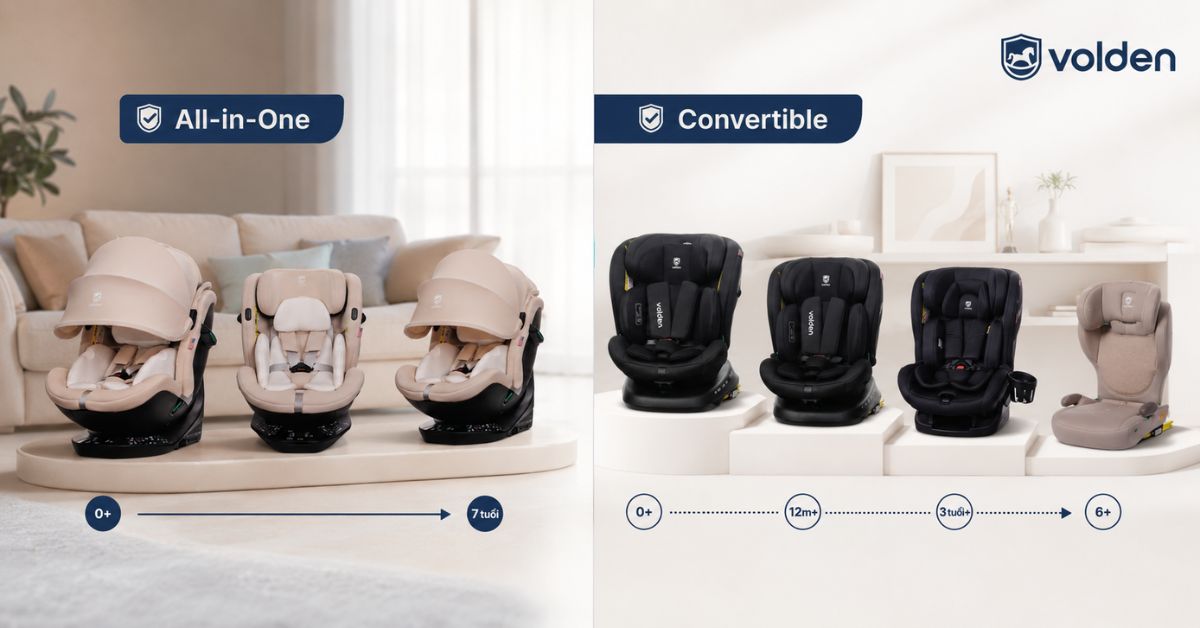
The key difference is straightforward:
Convertible car seat: rear-facing + forward-facing.
All in one car seat: rear-facing + forward-facing + booster.
| Feature | All in One Car Seat | Convertible Car Seat |
| Rear-facing | Yes | Yes |
| Forward-facing harness | Yes | Yes |
| Booster mode | Usually yes | Usually no |
| Number of stages | 3–4 | Usually 2 |
| Long-term use | Longer | Requires another seat later |
| Size | Often larger | More size options |
| Weight | Often heavier | Varies |
| Upfront cost | Usually higher | Often lower |
| Best for | Long-term convenience | Simpler staged use |
Neither option is automatically better. The right choice depends on your child, vehicle, and how you plan to use the seat.
An all in one car seat may provide better long-term value because one seat can cover several stages.
Instead of buying a convertible seat and then a booster, parents may use the same restraint for many years.
This makes an all-in-one model worth considering if you:
However, more modes do not automatically mean better value.
A large all-in-one model may become inconvenient if you later need three car seats across or add another passenger to the back seat.
A convertible car seat may offer better value if it fits your current needs more precisely and you are comfortable buying a booster later.
Both an all in one car seat and a convertible car seat can support extended rear-facing use.
The category matters less than the specifications of the individual seat.
Before buying, check:
Parents should keep children rear-facing until they reach the maximum rear-facing limits allowed by their specific seat.
An all in one car seat is not automatically better for rear-facing simply because it offers more modes.
For babies and toddlers, focus first on how well the seat works during the stages your child needs now.
Vehicle space can be a deciding factor.
Some all in one car seat models are larger because they must accommodate multiple stages. Convertible seats may offer more compact choices.
For a small car, check:
If you need three car seats across, width becomes even more important.
Do not choose based only on labels such as “slim.” Compare the actual dimensions with your vehicle’s back seat.

An all in one car seat is worth considering if you want one seat to handle most stages of your child’s car-seat journey.
It may be right for you if:
The biggest benefit is simplicity over time.
A convertible car seat may make more sense if your current priority is safe rear-facing and forward-facing harness use.
Consider one if:
For many parents, buying the seat that works best now can be more practical than trying to predict every need several years ahead.
An all in one car seat offers more stages in one product, while a convertible car seat focuses mainly on rear-facing and forward-facing harness use.