

news
September 10, 2026
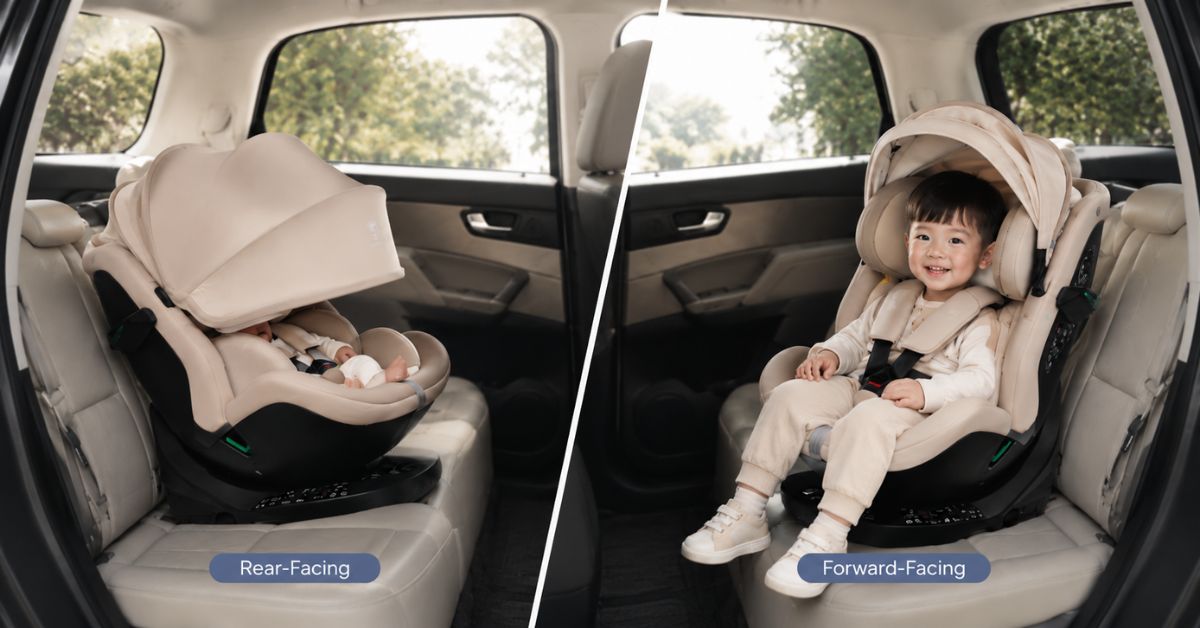
A convertible car seat allows a child to transition from rear-facing to forward-facing without needing to switch seats too early. Volden guides parents on how to select, install, and adjust the harness, as well as how to determine the right time to change the seat’s orientation.
A convertible car seat is designed to support more than one stage of a child’s development. It can first be used as a rear-facing car seat, then converted to a forward-facing car seat when the child reaches the appropriate limits.
Unlike an infant car seat, a convertible model usually remains installed in the vehicle. It does not typically function as a removable carrier.
The main advantage is longer use. Many models offer higher rear-facing height and weight limits than infant-only seats, allowing children to remain rear-facing for longer.
The main differences are:
| Seat type | Rear-facing | Forward-facing | Booster |
| Infant car seat | Yes | No | No |
| Convertible car seat | Yes | Yes | Usually no |
| All-in-one car seat | Yes | Yes | Yes |
Some convertible models can accommodate newborns, but parents should not rely on age labels alone. Always check the manufacturer’s minimum height, weight, harness position, approved infant inserts, and recline requirements.
The American Academy of Pediatrics recommends keeping infants and toddlers rear-facing until they reach the highest weight or height permitted by their car seat manufacturer.
This means a convertible car seat is particularly useful for families who want to extend rear-facing use beyond the limits of an infant carrier.

The best convertible car seat should fit three things correctly: your child, your vehicle, and your family’s daily routine.
Start with the child’s current measurements. Compare both the rear-facing and forward-facing limits instead of focusing only on an advertised age range.
Important specifications include:
Vehicle compatibility is equally important. Convertible seats can occupy considerable front-to-back space when rear-facing.
For smaller cars, measure the rear seat and consider how much room the front passenger or driver needs.
Parents should compare:
| Factor | What to check |
| Child fit | Height, weight and harness range |
| Rear-facing use | Maximum allowed limits |
| Vehicle fit | Width and front-to-back space |
| Installation | Seat belt or lower anchors |
| Harness | Easy adjustment and tightening |
| Recline | Clear angle indicators |
| Cleaning | Removable, washable fabric |
Some models also include features such as an anti-rebound bar, load leg, rotating base, or additional side-impact components.
A rotating convertible car seat can make it easier to place a child into the vehicle. However, rotating models may also require more space.
Parents should prioritize correct fit and installation before convenience features.
Price alone is also not a reliable measure of suitability. A simpler seat that installs securely in your vehicle can be a better choice than a premium model that is difficult to use correctly.
Correct car seat installation begins with the manufacturer’s manual and the vehicle owner’s manual.
When using a convertible model rear-facing, install it in an approved rear seating position using the correct rear-facing belt path.
Depending on the seat and vehicle, installation may use:
Do not combine both methods unless the manufacturer specifically allows it.
After installation, check the seat at the belt path. It should not move more than about one inch from side to side or front to back.
The recline angle also matters, particularly for babies. Many seats include a bubble, line, or mechanical indicator to show the permitted rear-facing position.
Next, check the harness:
Parents can use the pinch test to check harness tension. If excess webbing can be pinched at the shoulder, the harness may need further tightening.
Avoid adding pillows, inserts, strap covers, or padding unless approved by the car seat manufacturer.
When the seat later changes to forward-facing, parents must follow the instructions for the new configuration.
This may include changing the belt path, harness height, recline setting, and using the top tether.
A simple pre-drive check includes:
If parents are unsure about installation, a certified Child Passenger Safety Technician (CPST) can help inspect the setup and demonstrate correct use.

Parents should not switch a convertible car seat to forward-facing simply because a child reaches a particular birthday.
The more important factors are the manufacturer’s rear-facing height and weight limits.
Children should remain in a rear-facing car seat until they reach the maximum rear-facing limit allowed by their specific seat.
Check regularly:
A toddler’s legs touching the vehicle seat does not automatically mean the child has outgrown rear-facing mode.
Once a rear-facing limit is reached, the seat can be converted according to the manufacturer’s instructions.
The child then uses the forward-facing harness until reaching the maximum height or weight allowed for that mode.
The typical progression is:
Rear-facing → Forward-facing with harness → Booster seat → Vehicle seat belt
Parents should avoid skipping directly from rear-facing to a booster before the child meets the requirements for booster use.
Also check the seat regularly for:
Registering the convertible car seat with the manufacturer can also help parents receive important recall or safety information. A convertible car seat offers families a practical way to support children from rear-facing to forward-facing travel.